


How CBSE Schools in Kolhapur Can Help Students Avoid Online Risks?
Students today are growing up in a digital world. They use the internet for learning, research, videos, assignments, communication, games, creative work, and entertainment. Technology can support learning in many positive ways. It can help students explore new ideas, access information, build digital skills, and stay connected with the world.
However, online spaces also come with risks.
A student may click on an unsafe link, share personal information, accept an unknown request, forward unverified content, face online teasing, copy material without understanding it, or spend too much time on digital platforms. Many of these actions may seem small at first, but they can affect safety, confidence, privacy, emotional well-being, and learning habits.
This is why CBSE schools in Kolhapur should help students understand online risks early. The aim is not to make students afraid of technology. The aim is to help them use digital platforms with awareness, responsibility, and confidence.
Why online safety matters for students?
Online safety is no longer a separate topic. It is connected with everyday learning. Students may use devices for school projects, online classes, research, presentations, coding, reading, videos, or quizzes. They may also use social media, gaming platforms, messaging apps, and search engines outside school.
This means students need guidance on both learning-related and personal digital use.
Online risks can include:
| Online risk | What it may involve |
|---|---|
| Cyberbullying | Teasing, mocking, exclusion, threats, or hurtful comments online |
| Privacy risk | Sharing phone numbers, addresses, photos, school details, or passwords |
| Unsafe links | Clicking on suspicious links, fake offers, or harmful downloads |
| Fake information | Believing or forwarding unverified content |
| Online strangers | Accepting unknown requests or sharing details with unknown people |
| Digital footprints | Posting content that may remain online or be shared further |
| Gaming risks | Chat with strangers, in-app purchases, or excessive screen time |
| Copying content | Using online material without understanding, credit, or originality |
| AI misuse | Depending on tools without thinking, checking, or learning |
| Screen imbalance | Loss of focus, poor sleep, and reduced offline activity |
Students should understand that online safety is not only about avoiding danger. It is also about making better choices.
Do CBSE and Indian education bodies discuss cyber safety?
Yes. Cyber safety is recognised as an important part of school education and student well-being.
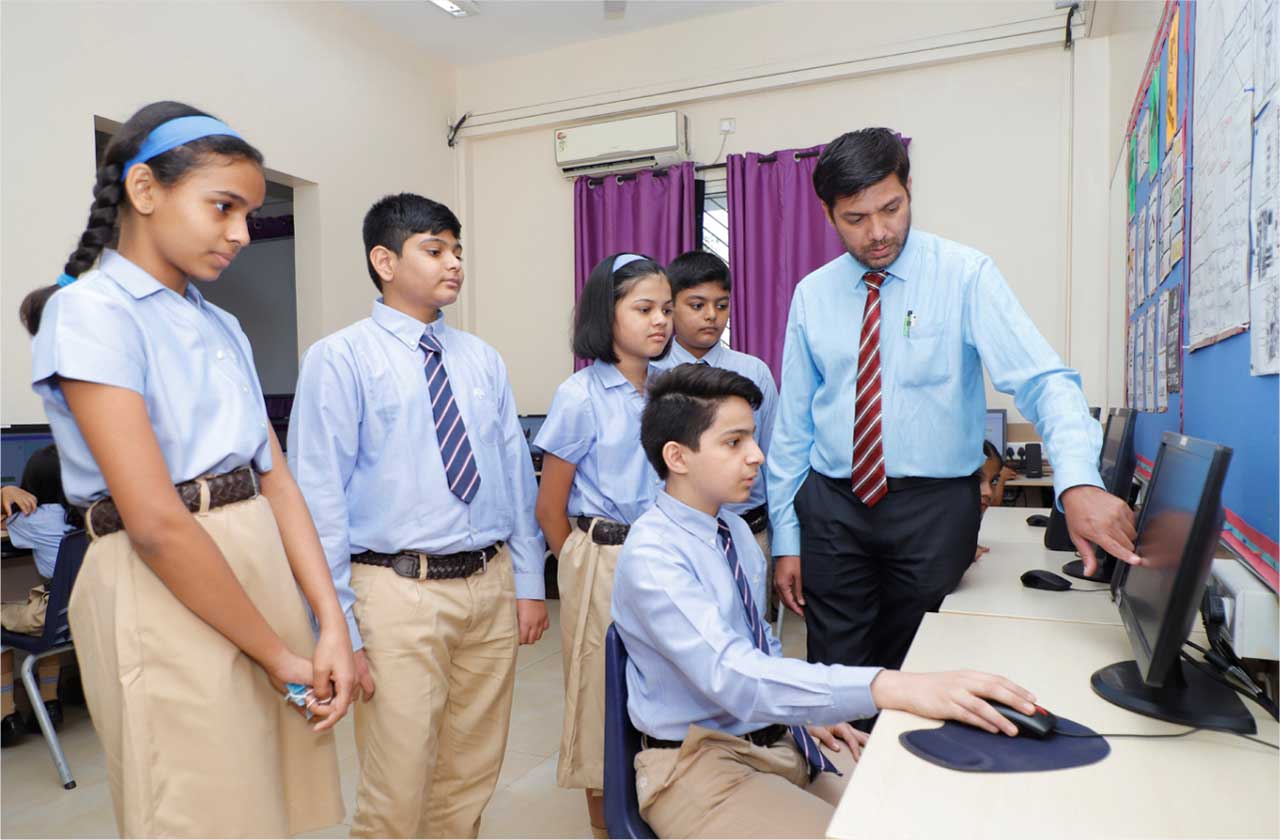
CBSE's school safety infrastructure guidance mentions that schools should have provisions related to cyber safety in computer laboratories and that students should use computer laboratories under teacher supervision.
CBSE has also released cyber safety material for students. Its Cyber Safety Manual is designed to create awareness among secondary and senior secondary students about safe online habits, personal safety, and responsible digital behaviour.
The Ministry of Education has also referred to the CBSE Cyber Security Handbook and PRAGYATA guidelines for safe and responsible digital education. These references highlight the importance of privacy, cyber safety, student well-being, and responsible use of electronic devices and social media.
This shows that online safety is not only a home concern. Schools, teachers, students, and parents all have a role to play.
Why students may not recognise online risks?
Students may not always realise when something online is risky. A link may look attractive. A message may seem friendly. A joke may seem harmless. A forwarded video may look real. A game chat may feel casual. A social media post may feel temporary.
But online actions can travel further than expected.
A private message can be screenshotted. A photo can be forwarded. A rude comment can hurt someone deeply. A fake link can steal information. A copied assignment can affect learning. A careless post can become part of a student's digital footprint.
CBSE Schools in Kolhapur should help students pause before they click, post, share, forward, or respond.
What students should understand about digital footprints?
A digital footprint is the trail a person leaves online. It can include posts, comments, likes, photos, videos, usernames, shared documents, search behaviour, gaming activity, and messages.
Students should understand that the internet does not always forget.
Even if something is deleted, it may still exist as a screenshot, saved file, forwarded message, or copied post. This does not mean students should be scared. It means they should be thoughtful.
Before posting or sharing anything, students can ask:
- Is this true?
- Is this kind?
- Is this safe?
- Is this necessary?
- Would I be comfortable if a teacher or parent saw this?
- Could this hurt someone?
- Could this create a problem later?
These questions help students build digital responsibility.
Why online behaviour affects emotional safety?
Online risks are not only technical. They are also emotional.
A student who is mocked in a group chat may feel anxious. A student who is excluded from an online group may feel lonely. A student who receives repeated comments about appearance, marks, language, or behaviour may lose confidence. A student who is pressured to share photos or personal information may feel unsafe.
Schools should help students understand that online behaviour is real behaviour. Kindness, respect, consent, and responsibility matter online just as much as they do in the classroom.
Students should be taught that cyberbullying is not "just a joke". If a joke repeatedly hurts, excludes, embarrasses, or humiliates someone, it is a serious concern.
How CBSE schools in Kolhapur can help students avoid online risks?
Schools can support students through regular guidance, classroom conversations, digital safety sessions, supervised technology use, and open communication.
1. Teach cyber safety as a life skill
Online safety should not be discussed only once a year. It should be part of regular conversations. Students should learn about passwords, privacy, safe browsing, cyberbullying, digital footprints, fake information, responsible sharing, and respectful online communication.
2. Use real-life examples
Students understand better when examples feel real. Teachers can discuss situations such as suspicious links, fake messages, group chat teasing, unknown friend requests, copying online work, or sharing photos without permission.
3. Encourage students to report concerns
Students should know whom to approach if something online makes them uncomfortable. This could be a class teacher, counsellor, coordinator, or trusted adult. Schools should create a culture where students can seek help without fear of blame.
4. Supervise digital learning spaces
Computer labs, online activities, digital projects, and school technology use should be guided by teachers. Supervision helps students learn safe habits and reduces careless use.
5. Teach source-checking
Students should learn that not everything online is true. They should be guided to compare sources, check dates, avoid forwarding unverified content, and understand the difference between opinion, fact, advertisement, and misinformation.
6. Discuss responsible AI use
As students begin using AI tools, they should understand that these tools can support learning but cannot replace thinking. Students should not blindly copy AI-generated content. They should check, question, understand, and use their own judgement.
How teachers can approach online safety?
Teachers have an important role in shaping students' digital habits. Online safety should not be taught through fear alone. Students need practical guidance.
Teachers can:
| Teacher approach | How it helps students |
|---|---|
| Discuss online risks calmly | Students feel safe asking questions |
| Use age-appropriate examples | Students understand the issue better |
| Correct unsafe habits early | Small mistakes do not become serious |
| Encourage responsible research | Students learn how to use online information |
| Discuss cyberbullying | Students understand emotional impact |
| Promote respectful communication | Online behaviour becomes more thoughtful |
| Guide project work | Students learn originality and source use |
| Involve parents when needed | School-home support becomes stronger |
Teachers should also avoid shaming students for digital mistakes. Instead, they should guide students towards better choices.
Mistakes students should avoid
Students may make online mistakes because of excitement, pressure, curiosity, or lack of awareness.
Common mistakes include:
| Mistake | Why it can be risky | Better approach |
|---|---|---|
| Sharing passwords with friends | Accounts can be misused | Keep passwords private |
| Accepting unknown requests | Strangers may not be safe | Connect only with known people |
| Forwarding content without checking | False information can spread | Verify before sharing |
| Posting in anger | Words can create lasting harm | Pause before responding |
| Treating cyberbullying as a joke | It can hurt confidence and well-being | Speak up and seek help |
| Copying online answers | Learning becomes weak | Understand and write originally |
| Ignoring privacy settings | Personal details may become public | Review settings with guidance |
| Hiding online problems | Issues may grow | Inform a trusted adult |
Students should learn that online choices have real consequences.
How parents can get involved?
Parents play an important role in digital safety. Students should not feel that online mistakes will only lead to anger or punishment. If they fear harsh reactions, they may hide problems.
Parents can create a safer home environment by having calm conversations.
They can ask:
- What apps or websites are you using for learning?
- Did anything online make you uncomfortable?
- Do you know how to report or block someone?
- Are your passwords private?
- Do you check information before forwarding it?
- How much time are you spending online?
- Do you feel pressured by any online group?
Parents should also avoid saying, "Do not use the internet." This may not be practical. Instead, they should help students use the internet safely and responsibly.
Questions parents should ask during school admission
During CBSE school admission in Kolhapur, parents can ask how the school handles online safety and digital responsibility.
Useful questions include:
| Question parents can ask | Why it matters |
|---|---|
| How does the school teach cyber safety? | Shows whether online safety is taken seriously |
| Are students guided on digital footprints and privacy? | Shows awareness of long-term online behaviour |
| How are computer labs supervised? | Shows attention to safe digital learning |
| Does the school discuss cyberbullying? | Shows emotional safety awareness |
| Are students taught how to check online information? | Shows focus on media literacy |
| How does the school guide responsible use of technology? | Shows balance between learning and safety |
| Is there a reporting system for online concerns? | Shows whether students can seek help |
| How are parents involved in digital safety discussions? | Shows school-home collaboration |
These questions help parents understand whether the school prepares students for the digital world responsibly.
At Podar International School in Kolhapur, we believe that digital learning should be supported with digital responsibility. Students need to understand how to use technology safely, respectfully, and thoughtfully. Our teachers guide students to use online resources for learning while also helping them understand privacy, cyber safety, respectful communication, source-checking, and responsible online behaviour.
We have conducted focused student awareness initiatives on online safety, including an insightful Session on Cyber Crime under the Girls' and Boys' Welfare Committees, in collaboration with Federal Bank and Radio City. The session guided students on safe online practices, financial cyber security, and responsible digital behaviour.
We also encourage students to understand media, technology, and communication in a thoughtful way. For example, under the Mind to Mic theme of the Integrated Learning Program, students of Grades IX and X interacted with the Editor of Dainik Sakal and explored media, AI, social media responsibility, and emerging career opportunities.
These initiatives reflect our focus on helping students become aware, careful, and confident digital learners. The aim is not to create fear around the internet, but to help students use online spaces safely, respectfully, and responsibly.
For parents exploring CBSE school admission in Kolhapur, please get in touch with our team.
Email Address: admissions@podar.org
Telephone No: 6366437865
Topics


