


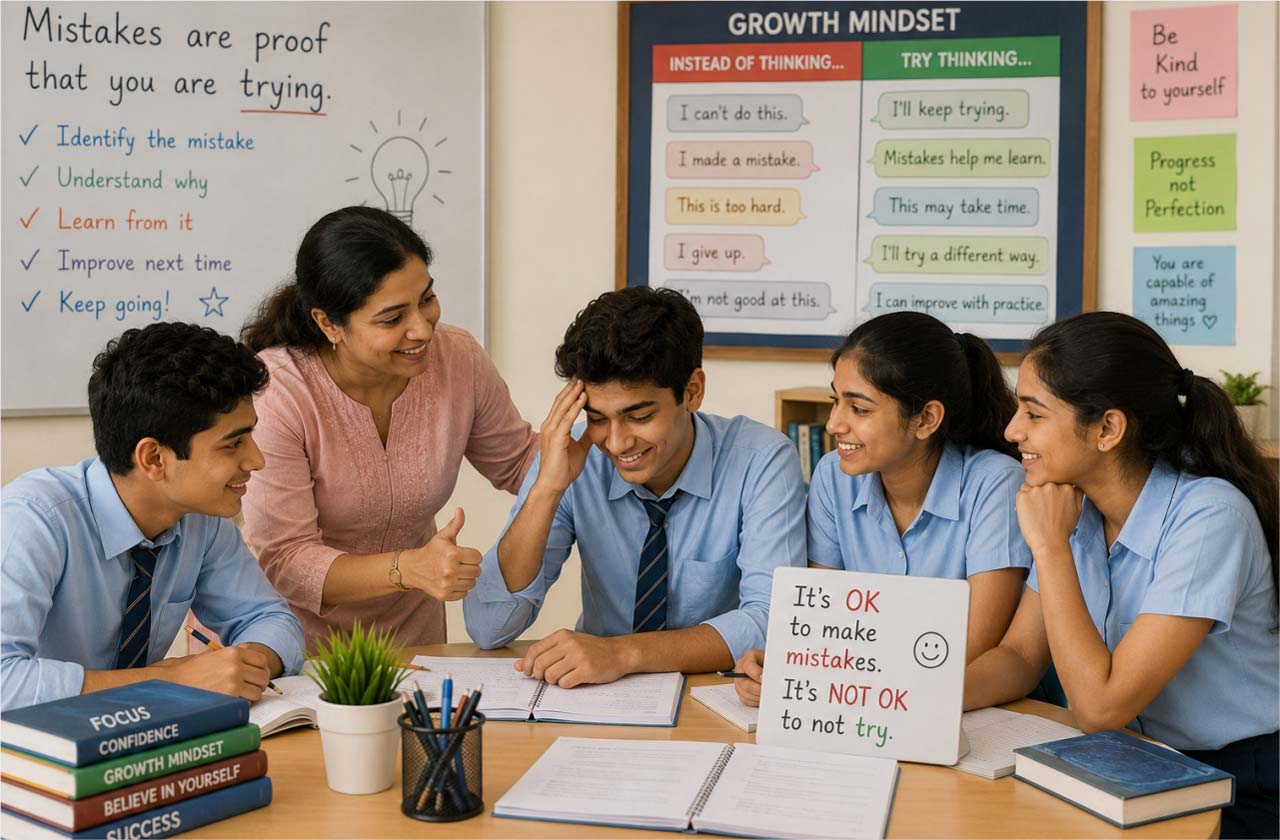
Why Schools in Kolhapur Should Teach Students How to Handle Mistakes
Mistakes are a natural part of learning. Every student makes them, whether in academics, sports, friendships, behaviour, communication or decision-making. A wrong answer in class, a missed homework deadline, a poor test score, a misunderstanding with a friend or an error during a performance can all become learning moments. What matters most is not whether mistakes happen, but how students learn to handle them.
For schools in Kolhapur, teaching students how to respond to mistakes is an important part of building confidence, responsibility and emotional strength. When students understand that mistakes are not the end of the road, they become more willing to try, ask questions and improve.
Why students must understand that mistakes happen
Many students feel ashamed when they make mistakes. Some become silent. Some hide their errors. Some blame others. Some stop trying because they fear being judged again. This happens when students grow up believing that mistakes mean failure.
In reality, mistakes show where learning is still needed. A wrong answer can show a gap in understanding. A poor performance can show the need for more practice. A behavioural mistake can help a student understand responsibility and consequences.
Top schools in Kolhapur help students see mistakes as signals, not labels. A mistake does not mean a student is weak, careless or incapable. It means there is something to review, correct or improve.
Why handling mistakes is more important than avoiding them
Students who are afraid of mistakes may avoid challenges. They may choose easy tasks, copy others, stay quiet in class or hesitate to participate in activities. This can limit their growth.
On the other hand, students who know how to handle mistakes become more resilient. They learn to pause, understand what went wrong, accept responsibility and try again. This attitude supports academic success and personal development.
| When students fear mistakes | When students learn from mistakes |
|---|---|
| They avoid asking questions | They clarify doubts early |
| They hide errors | They discuss what went wrong |
| They lose confidence | They build problem-solving ability |
| They blame others | They take responsibility |
| They avoid new challenges | They become open to improvement |
| They feel ashamed | They see mistakes as part of learning |
This difference can shape a student's entire school experience.
How teachers can help students handle mistakes
Teachers play a major role in shaping how students respond to mistakes. The tone used by teachers matters. If a teacher reacts with anger, sarcasm or public embarrassment, students may become fearful. If a teacher responds with firmness and guidance, students learn better.
For example, if a student gives a wrong answer, a teacher can say, "That is not the correct answer, but it shows you are thinking. Let us look at the step where it changed." This keeps the correction clear without making the student feel humiliated.
If a student forgets homework, the teacher can ask, "What made it difficult to complete it? How can you plan better next time?" This helps the student reflect and take responsibility.
Teachers should correct mistakes, but the correction should be constructive. Students need to know what went wrong, why it matters and how to improve.
The right tone for teachers and parents
The tone should be calm, clear and respectful. Students should not feel that one mistake has changed how adults see them. They should feel that adults are guiding them towards better choices.
| Situation | Harsh tone | Better tone |
|---|---|---|
| Poor test score | "You never study properly." | "Let us see which topics need more practice." |
| Wrong answer | "How can you not know this?" | "Let us understand where the confusion happened." |
| Missed homework | "You are careless." | "What stopped you from completing it on time?" |
| Behaviour mistake | "You always create problems." | "This behaviour was not acceptable. Let us discuss what should change." |
| Lost competition | "You should have done better." | "What did you learn from this attempt?" |
A better tone does not mean ignoring mistakes. It means addressing them without damaging confidence.
How parents should see mistakes
Parents often feel worried when students make mistakes. A low mark, a complaint from school or poor performance in an activity can make parents anxious. However, the response at home can either build confidence or increase fear.
Parents should avoid immediate comparison. Saying "Your friend did better" or "Your sibling never made this mistake" can make students feel small. Instead, parents should help students reflect.
They can ask: "What do you think went wrong?" "What support do you need?" "What can you do differently next time?" These questions encourage ownership.
Parents should also separate the student from the mistake. The student is not the mistake. The mistake is one action, result or choice that can be corrected.
Proactive ways to teach students how to handle mistakes
Proactive support means preparing students before mistakes happen. Schools can make this part of everyday learning.
Teachers can discuss examples of famous people who failed before succeeding. They can show how scientists, writers, sportspersons and leaders improved through repeated attempts. This helps students understand that mistakes are normal in every field.
Schools can also conduct reflection activities after tests, projects and competitions. Instead of only giving marks, teachers can ask students to write what they learnt, what was difficult and what they will improve next time.
Proactive strategies for schools
| Strategy | How it helps |
|---|---|
| Reflection sheets after tests | Students learn to review mistakes calmly |
| Classroom discussions on failure | Mistakes become normalised |
| Practice sessions before major tasks | Students gain confidence through repetition |
| Peer learning | Students understand that others also make mistakes |
| Feedback notebooks | Students track improvement over time |
| Role-play activities | Students practise handling difficult situations |
| Growth-focused praise | Students value effort and improvement |
These strategies help students develop a healthy relationship with mistakes.
Checklist for teachers- Correct the mistake without humiliating the student.
- Explain what went wrong clearly.
- Ask the student to reflect.
- Give practical steps for improvement.
- Appreciate effort where possible.
- Avoid labels such as careless, weak or lazy.
- Encourage students to ask doubts.
- Use mistakes as teaching moments.
- Follow up after repeated mistakes.
- Help students repair social or behavioural mistakes.
- Stay calm before reacting.
- Avoid comparison with others.
- Ask what happened before giving advice.
- Focus on solutions, not blame.
- Help create a plan for improvement.
- Appreciate honesty when the student admits a mistake.
- Avoid repeating old mistakes in every conversation.
- Speak to teachers when support is needed.
- Encourage responsibility without shame.
- Remind the student that improvement is possible.
As one of the leading English medium schools in Kolhapur, we believe that mistakes are not something to fear. They are part of learning, growing and becoming responsible. A school environment that handles mistakes well helps students become confident, honest and resilient.
When teachers and parents respond with patience and clarity, students learn to accept feedback. They stop hiding mistakes and start improving from them. This helps in academics, behaviour, relationships and future life.
Our goal is not to create students who never make mistakes. The goal is to create students who know how to learn, correct themselves and move forward with confidence. To know more about our school and our admission process, get in touch with our team:
Email Address : admissions@podar.org
Telephone No : 6366437865
Topics


