


Should Parents Ask About Practical Learning During Schools Admission in Chandrapur?
Practical learning helps students understand concepts by doing, observing, asking, experimenting, discussing, and applying ideas in real situations. It moves learning beyond memorising answers. It helps students see why a concept matters, where it is used, and how it connects with everyday life.
This is why parents should ask about practical learning during the admission process. A school that uses practical learning well can help students become more curious, confident, and better prepared for future academic and life challenges.
What is practical learning?
Practical learning is a teaching approach where students learn by applying concepts, not only by reading or listening. It can include experiments, projects, activities, field observations, models, role plays, group work, presentations, surveys, real-life examples, and problem-solving tasks.
For example, students may understand measurement by measuring classroom objects. They may understand plants by observing leaves and roots. They may understand money through a mock shopping activity. They may understand environmental responsibility through a local cleanliness or water conservation project.
| Traditional learning may focus on | Practical learning focuses on |
|---|---|
| Listening to explanations | Doing and observing |
| Memorising answers | Understanding concepts |
| Written exercises only | Activities, projects, and application |
| Learning from textbooks alone | Connecting lessons with real life |
| Correct answers | Thinking process and problem-solving |
| Same method for all students | Different ways of learning |
Practical learning does not mean textbooks are not important. Textbooks provide structure. Practical learning helps students understand that structure more deeply.
Why is practical learning important?
Students learn better when they are actively involved. When they see, touch, build, compare, test, discuss, and explain, they are more likely to understand the lesson.
Practical learning helps students move from "I remember this" to "I understand this".
It supports:
| Benefit | How practical learning helps |
|---|---|
| Concept clarity | Students understand how ideas work in real situations |
| Curiosity | Students ask more questions |
| Confidence | Students participate and try new things |
| Communication | Students explain what they observed or created |
| Teamwork | Students work with classmates |
| Problem-solving | Students learn to find solutions |
| Creativity | Students explore different ways to complete a task |
| Memory | Students remember better through experience |
This approach is especially useful because students have different learning styles. Some students understand through reading. Some need visuals. Some learn better through discussion. Some understand best when they try something themselves. Practical learning gives students more than one way to understand a topic.
Do education frameworks support practical learning?
Yes. Practical learning is aligned with the direction of modern education in India.
The National Education Policy 2020 encourages experiential learning within each subject and emphasises connections across subjects. It also supports activity-based, discovery-based, and interactive learning approaches.
The National Curriculum Framework for School Education 2023 also highlights experiential, activity-based, and discovery-based pedagogy. It says learning should rely less only on textbooks and more on exploration, experience, and active classroom engagement.
The Ministry of Education has also noted that skill-based and experiential learning are being promoted across school and higher education, including initiatives such as pre-vocational education, bagless days, off-textbook experiential learning, and activity-based resources.
This shows that practical learning is not only a classroom trend. It is part of a larger shift towards meaningful, skill-based, and experiential education.
Why are schools in Chandrapur focusing more on practical learning today?
Schools are focusing more on practical learning because students need more than memorised knowledge. The world around them is changing quickly. They need to understand concepts, ask questions, solve problems, work in teams, use technology responsibly, communicate clearly, and adapt to new situations.
Practical learning helps build these skills.
Why parents should ask about practical learning during admission
During school admission in Chandrapur, parents should not only ask what subjects are taught. They should also ask how those subjects are taught.
Two schools may follow a similar curriculum, but the classroom experience may be very different. In one school, students may mostly listen and memorise. In another, they may observe, discuss, experiment, create, and reflect.
Parents should ask about practical learning because it shows whether the school values understanding, not only syllabus completion.
Questions parents should ask
Parents can ask simple but meaningful questions during the admission process.
| Question parents can ask | Why it matters |
|---|---|
| How does the school include practical learning in regular classes? | Shows whether it is part of daily teaching |
| Are activities linked to learning outcomes? | Shows whether activities are meaningful |
| How are science, maths, and language concepts made practical? | Shows how abstract topics are explained |
| Are students encouraged to ask questions? | Shows whether curiosity is supported |
| Do students get project-based learning opportunities? | Shows whether learning goes beyond textbooks |
| How does the school support different learning styles? | Shows whether all students are considered |
| Are group activities structured properly? | Shows whether teamwork is guided |
| How are parents informed about classroom learning? | Shows school-home communication |
| Do teachers help students reflect after activities? | Shows whether activities lead to understanding |
These questions help parents understand whether practical learning is actually part of the school culture.
Practical learning should not become random activity
Not every activity becomes practical learning. Sometimes, activities may look attractive but may not build real understanding. For example, a colourful chart may look good, but if students only copy information from the internet, they may not learn much.
Good practical learning should have a clear purpose.
| Weak activity | Strong practical learning |
|---|---|
| Done only to keep students busy | Linked to a concept |
| Focuses only on decoration | Focuses on understanding |
| One or two students do everything | Every student has a role |
| Students copy information | Students observe, think, and explain |
| No discussion after the task | Students reflect on what they learnt |
| Activity feels separate from the lesson | Activity supports the lesson |
Parents should ask how activities are planned, guided, and reviewed.
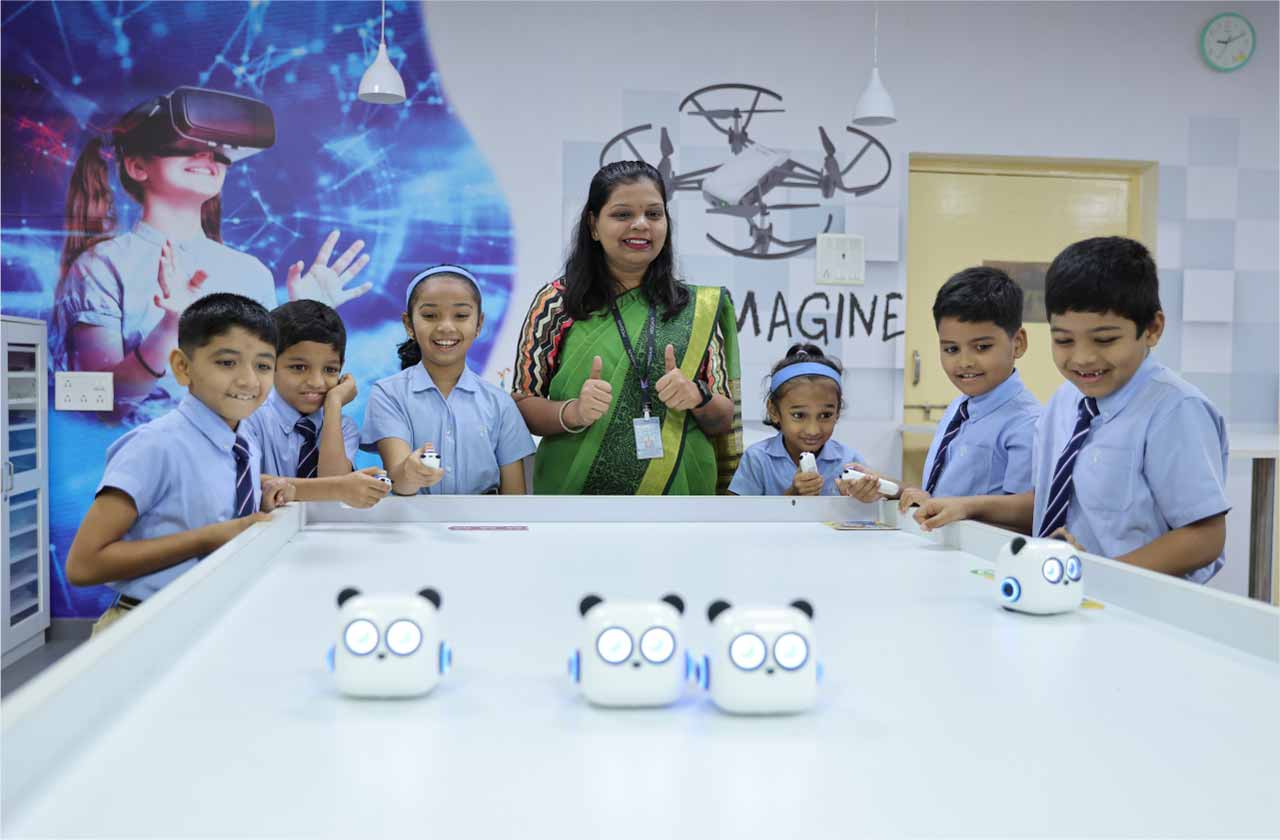
At Podar International School in Chandrapur, we believe that practical learning helps students understand concepts with greater clarity and confidence. Our teachers use classroom activities, projects, discussions, real-life examples, experiments, and group work to make learning more meaningful.
The focus is not only on completing the syllabus. The focus is on helping students observe, question, participate, apply ideas, and connect lessons with the world around them. This approach supports curiosity, confidence, communication, teamwork, and problem-solving skills.
For parents exploring school admission in Chandrapur, please get in touch with our team.
Email Address: admissions@podar.org
Telephone No: 7420856067
Topics


