


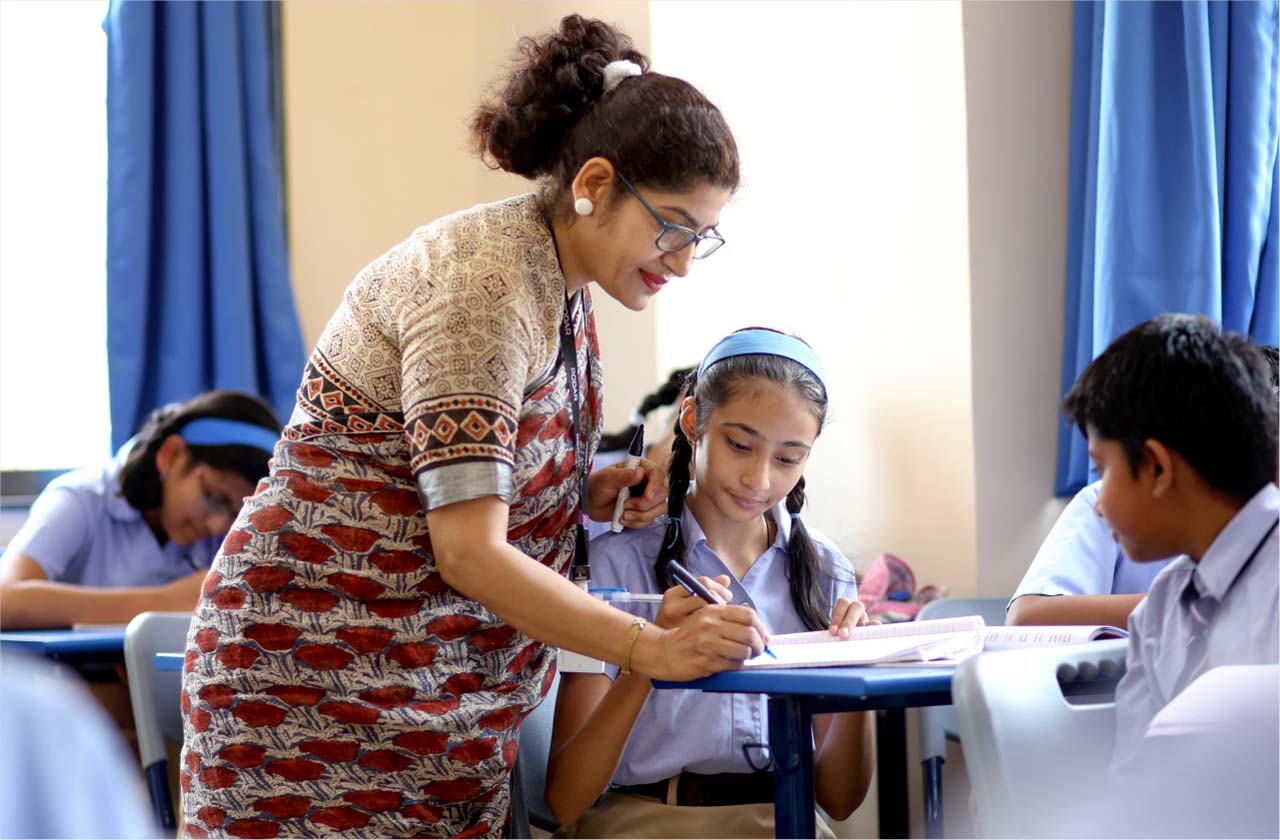
How Schools in Hassan Can Help Students Use Teacher Feedback to Improve
Feedback is an important part of learning. Students do not improve only by attending classes, completing homework, or writing examinations. They improve when they understand what they are doing well, where they are making mistakes, and how they can do better next time.
This is where teacher feedback becomes important.
For schools in Hassan, feedback should not be seen as something students must fear. It should be seen as guidance. When given in the right way, feedback can help students build confidence, correct mistakes, understand their learning gaps, and take more responsibility for their progress.
Why teacher feedback matters?
Teacher feedback helps students understand their learning more clearly. A student may think they know a topic well, but the teacher may notice gaps in concept clarity, answer writing, presentation, time management, or revision habits. Similarly, a student may feel they are not improving, but the teacher may notice steady progress.
Feedback helps bridge this gap.
It gives students direction. Instead of simply hearing "good" or "needs improvement", students should understand what exactly was good and what exactly needs improvement.
| Type of feedback | How it helps students |
|---|---|
| Feedback on strengths | Helps students know what they should continue doing |
| Feedback on mistakes | Helps students understand what needs correction |
| Feedback on effort | Encourages consistency and discipline |
| Feedback on behaviour | Helps students improve classroom habits |
| Feedback on participation | Builds confidence and involvement |
| Feedback on exam performance | Helps students prepare better next time |
Good feedback gives students a clearer path forward.
Positive and negative feedback both have value
Students often feel happy when they receive positive feedback and disappointed when they receive negative feedback. This is natural. However, schools need to help students understand that both types of feedback can support growth.
Positive feedback tells students what they are doing well. It can encourage them to continue working hard. For example, a teacher may say, "Your explanation was clear," or "You have improved your handwriting," or "You participated well in the group activity." Such feedback builds confidence.
Negative feedback, or corrective feedback, points out what needs improvement. For example, a teacher may say, "Your answer needs more examples," or "You should revise this concept again," or "You need to listen more carefully during group work." This should not discourage students. It should help them understand the next step.
| Positive feedback | Corrective feedback |
|---|---|
| Builds confidence | Builds awareness |
| Shows what is working | Shows what needs improvement |
| Encourages effort | Guides better effort |
| Helps students feel motivated | Helps students correct mistakes |
| Supports self-belief | Supports self-improvement |
As one of the leading ICSE schools in Hassan, we believe that students should learn that feedback is not a judgement of who they are. It is guidance on what they can improve.
Why students should not fear feedback?
Some students feel nervous when teachers give feedback. They may think feedback means they have failed. They may feel embarrassed if mistakes are pointed out. They may also worry that others are doing better.
Schools should help students change this mindset.
Feedback should be seen as an opportunity to improve. Every student makes mistakes. Every student has areas that need work. A student who receives feedback early can correct mistakes before they grow bigger.
For example, if a student is writing answers without enough explanation, feedback can help the student improve before the next test. If a student is not participating in class, feedback can help the student take small steps towards confidence. If a student is careless with revision, feedback can help build better study habits.
Feedback is not something to be scared of. It is a chance to understand oneself better.
Peer comparison is not the right way to view feedback
One common mistake students make is comparing feedback with classmates. If a teacher praises another student, some students may feel that they are not good enough. If a teacher gives them corrective feedback, they may feel embarrassed or discouraged.
Parents should also understand this. Teacher feedback should not become a tool for comparison at home.
Every student has a different learning journey. One student may need feedback on writing skills. Another may need support in maths. Another may need help with confidence. Another may need guidance on time management. Comparing one student's feedback with another student's feedback can reduce confidence and create pressure.
| Unhelpful response | Better response |
|---|---|
| "Why did your friend get better feedback?" | "What can we learn from your teacher's feedback?" |
| "You always make the same mistake." | "Let us understand how you can improve this step." |
| "Others are doing better than you." | "What is your next improvement goal?" |
| "This feedback is bad." | "This feedback shows where support is needed." |
Feedback should help students move forward, not feel smaller.
What helps students understand feedback better?
Feedback becomes useful only when students understand it properly. If feedback is too vague, students may not know what to do. If it is too harsh, they may lose confidence. If it is only praise, they may not know how to improve further.
Schools can help students understand feedback by teaching them to ask three simple questions:
- What did I do well?
- What do I need to improve?
- What should I do next?
These questions turn feedback into action.
For example, instead of only thinking, "My answer was wrong," a student can ask, "Was the concept wrong, or did I not explain it properly?" Instead of thinking, "I am weak in this subject," a student can ask, "Which part of this chapter do I need to revise?"
This helps students become more active learners.
What mistakes students should avoid after receiving feedback?
Feedback only helps when students respond to it in the right way. Some students ignore feedback. Some feel upset and stop trying. Some blame the teacher. Some compare themselves with others. Some improve for one day and then return to old habits.
Students should avoid these mistakes:
| Mistake | Why it can hurt progress | Better approach |
|---|---|---|
| Taking feedback personally | It can reduce confidence | See it as guidance |
| Ignoring feedback | Mistakes may continue | Note the key points |
| Comparing with classmates | It creates pressure | Focus on personal progress |
| Feeling discouraged | Improvement becomes harder | Ask what can be done next |
| Arguing immediately | Learning may stop | Listen first, then clarify |
| Not following up | Feedback remains unused | Review progress after some time |
Students should remember that feedback is useful only when it is applied.
Questions parents can ask teachers during feedback sessions
Feedback sessions are useful for parents too. Instead of only asking about marks, parents can ask questions that help them understand the student's overall progress.
| Question parents can ask | Why it helps |
|---|---|
| What are my child's strengths in class? | Helps parents recognise positive areas |
| Which areas need more attention? | Gives clear direction for improvement |
| Is the difficulty related to concept clarity, practice, confidence, or attention? | Helps identify the real issue |
| How does my child participate in class? | Shows confidence and engagement |
| Does my child ask doubts when needed? | Shows whether the student seeks help |
| How does my child respond to feedback? | Helps understand learning attitude |
| What can we do at home to support improvement? | Builds school-home teamwork |
| When should we review progress again? | Helps track improvement |
These questions make feedback sessions more meaningful.
How teachers should approach feedback sessions?
Teachers have an important responsibility while giving feedback. Students may remember not only what the teacher said, but also how it was said. Feedback should therefore be clear, kind, and constructive.
Teachers can approach feedback sessions by:
| Teacher approach | How it helps students |
|---|---|
| Begin with strengths | Students feel encouraged |
| Be specific about improvement areas | Students know what to work on |
| Avoid harsh labels | Students do not feel judged |
| Give examples | Students understand the feedback better |
| Suggest next steps | Feedback becomes actionable |
| Allow questions | Students can clarify doubts |
| Focus on progress | Students feel improvement is possible |
| Involve parents constructively | Home support becomes easier |
At Podar International School in Hassan, we believe that teacher feedback should help students grow with confidence and clarity. Our teachers guide students by recognising their strengths, identifying areas for improvement, and helping them understand the next steps in their learning journey.
The focus is not on making students afraid of mistakes. The focus is on helping them learn from mistakes, respond positively to correction, and use feedback as an opportunity to do better. Through regular classroom guidance, teacher-student interaction, and communication with parents, we work towards helping students become more confident, responsible, and reflective learners.
To know more about our school and the admission process, please get in touch with our team.
Email Address: admissions@podar.org
Telephone No: 6366437900
Topics


