


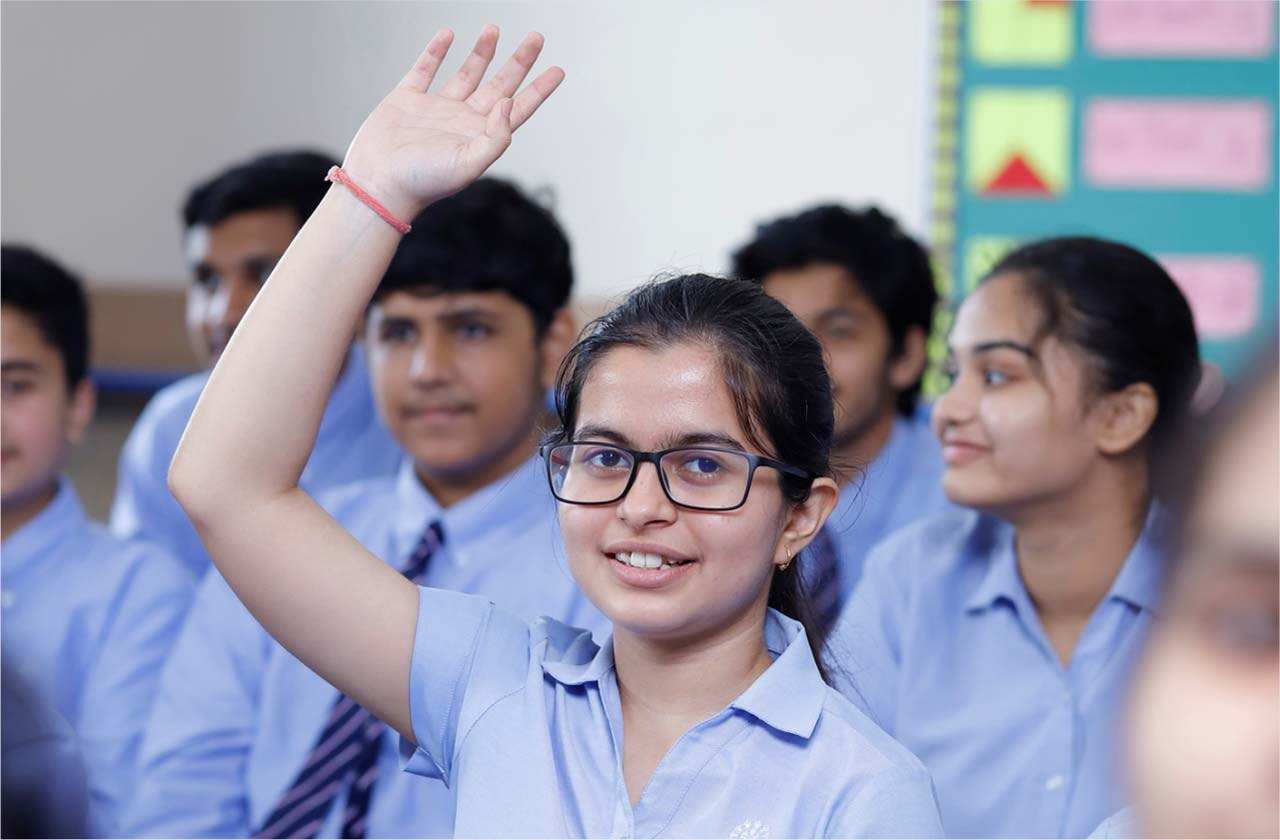
Should Parents Ask How CBSE Schools in Raipur Encourage Student Participation Beyond Academics?
School life shapes students in many ways. While textbooks and examinations build academic knowledge, participation beyond the classroom helps students discover confidence, creativity, teamwork, leadership, and self-expression. Activities such as sports, arts, projects, competitions, discussions, assemblies, and group work give students opportunities to apply what they learn, interact with others, and understand their own strengths.
This is why parents should ask about participation opportunities before choosing a CBSE school in Raipur. A school that encourages students to take part in activities beyond academics can help them grow into more confident, responsible, and well-rounded individuals.
What does student participation beyond academics mean?
Student participation beyond academics refers to meaningful involvement in activities that help students learn, express themselves, and build life skills outside regular classroom lessons.
This can include:
| Area of participation | Examples |
|---|---|
| Sports | Football, cricket, basketball, athletics, yoga, skating, chess |
| Performing arts | Dance, music, theatre, public speaking |
| Creative activities | Drawing, craft, writing, storytelling, design |
| Academic enrichment | Olympiads, quizzes, debates, exhibitions, projects |
| Leadership | Student council, house activities, class responsibilities |
| Technology and innovation | Coding, robotics, STEM activities, digital projects |
| Social development | Team activities, community initiatives, awareness campaigns |
| Communication | Presentations, group discussions, assemblies, speeches |
These activities help students discover what they enjoy and where their strengths may lie. They also make school life more balanced and engaging.
Why participation beyond academics matters
Academic learning gives students knowledge. Participation gives them confidence to use that knowledge in real situations.
A student who takes part in a debate learns how to organise thoughts and speak clearly. A student who joins a sports team learns discipline, teamwork, and resilience. A student who participates in a project learns planning, research, problem-solving, and presentation skills. A student who takes responsibility during an event learns leadership and accountability.
These experiences help students grow in ways that marks alone cannot show.
| Participation helps students build | Why it matters |
|---|---|
| Confidence | Students learn to speak, perform, and express ideas |
| Communication | Students explain thoughts clearly and listen to others |
| Teamwork | Students learn cooperation and shared responsibility |
| Discipline | Students understand practice, routine, and commitment |
| Creativity | Students explore new ideas and forms of expression |
| Resilience | Students learn to handle mistakes, loss, and feedback |
| Leadership | Students take initiative and manage responsibilities |
| Social skills | Students interact with different personalities |
For parents choosing CBSE schools in Raipur, this is an important point to consider. A good school should help students perform academically, but it should also help them become confident and capable individuals.
Participation is not only for highly confident students
One common misconception is that school activities are only for outgoing students. This should not be the case. A strong school environment should encourage every student to participate in a way that feels suitable and gradual.
Some students may enjoy speaking on stage. Some may prefer writing, drawing, coding, sports, organising, helping backstage, or working in a team. Participation should not mean forcing every student into the same activity. It should mean giving students different opportunities to discover their strengths.
For example:
| Type of student | Participation opportunity that may help |
|---|---|
| Shy student | Small group activities, reading aloud, art, guided presentations |
| Energetic student | Sports, dance, theatre, leadership tasks |
| Creative student | Art, writing, music, storytelling, design projects |
| Curious student | Science exhibitions, quizzes, projects, innovation labs |
| Helpful student | Team roles, classroom responsibilities, community activities |
| Analytical student | Chess, coding, maths clubs, problem-solving activities |
When schools recognise different personalities, participation becomes more inclusive.
Why parents should ask this during admission
During school admission in Raipur, parents may ask about syllabus, teaching methods, facilities, and academic support. Along with these, they should ask how the school helps students participate beyond academics.
This question matters because participation reflects the culture of the school. It shows whether students are encouraged to express themselves, work with others, take responsibility, and explore new interests.
Parents can ask:
| Question parents can ask | Why it matters |
|---|---|
| What kinds of activities are available beyond academics? | Shows whether students get varied exposure |
| Are activities open to all students or only selected students? | Shows whether participation is inclusive |
| How does the school encourage shy or hesitant students? | Shows whether the school supports different personalities |
| Are sports, arts, technology, and leadership activities part of school life? | Shows whether growth is balanced |
| How often do students get opportunities to participate? | Shows whether activities are regular or occasional |
| Are students encouraged to present, speak, and work in teams? | Shows whether communication skills are developed |
| How are parents informed about student participation? | Shows whether school-home communication is active |
| Does the school value participation, effort, and improvement? | Shows whether students are supported beyond winning |
These questions help parents understand whether the school supports overall student development.
Participation should not become pressure
While participation is important, it should not become another source of stress. Students should not feel that every activity is a competition or that they must win to be valued.
The purpose of participation is growth. Students should learn to try, practise, improve, cooperate, and enjoy learning beyond textbooks.
| Healthy participation | Unhealthy pressure |
|---|---|
| Encourages students to try | Forces students to perform |
| Values effort and improvement | Focuses only on winning |
| Supports different interests | Pushes every student into the same activity |
| Builds confidence gradually | Creates fear of failure |
| Helps students learn teamwork | Creates comparison and anxiety |
Schools should create an environment where students feel encouraged, not judged. This helps them participate with confidence.
How CBSE schools in Raipur can encourage better participation
CBSE schools in Raipur can make participation more meaningful by building it into everyday school life. Activities should not be treated as separate from learning. They should support academic, emotional, social, and creative growth.
Schools can encourage participation through:
1. Regular activity periods
Students should have time for sports, arts, music, theatre, reading, projects, and skill-based activities. Regular exposure helps students develop interest and confidence.
2. Classroom participation
Participation should not happen only on stage or during events. Teachers can encourage students to ask questions, explain answers, take part in discussions, and share ideas in class.
3. Group projects
Projects help students learn teamwork, planning, research, creativity, and communication. They also help students understand how classroom topics connect with real life.
4. Sports and physical activities
Sports help students build discipline, fitness, teamwork, patience, and resilience. They also teach students how to handle winning and losing gracefully.
5. Public speaking and presentations
Assemblies, debates, storytelling, speeches, and presentations help students improve communication and confidence. These opportunities should be introduced gradually so that students do not feel overwhelmed.
6. Leadership opportunities
Class responsibilities, house activities, event roles, and student councils can help students learn decision-making, accountability, and teamwork.
7. Creative and cultural activities
Art, music, dance, drama, craft, writing, and cultural events help students express themselves and appreciate different forms of creativity.
8. Technology and innovation activities
Coding, robotics, STEM projects, digital presentations, and innovation-based activities can help students build problem-solving skills and future-ready thinking.
Role of teachers in encouraging participation
Teachers play a major role in helping students participate. A student may have talent, but may hesitate because of fear, shyness, or low confidence. Encouragement from a teacher can help the student take the first step.
Teachers can support participation by:
| Teacher approach | How it helps students |
|---|---|
| Giving small opportunities first | Helps hesitant students start slowly |
| Appreciating effort | Builds confidence to try again |
| Avoiding comparison | Reduces fear and pressure |
| Encouraging teamwork | Helps students learn cooperation |
| Giving constructive feedback | Helps students improve |
| Recognising different strengths | Makes participation more inclusive |
| Creating a safe classroom culture | Helps students speak without fear |
When teachers value effort and growth, students become more willing to participate.
Role of parents in supporting participation
Parents also have an important role. Some students may avoid activities because they fear failure or comparison. Others may feel that academics are the only thing that matters. Parents can help by encouraging balanced growth.
Parents can support participation by:
- appreciating effort, not only prizes
- allowing students to explore different interests
- avoiding comparison with other students
- asking what the student enjoyed and learnt
- attending school events when possible
- helping students manage time between academics and activities
- encouraging shy students without forcing them
- respecting interests that may be different from the parent's expectations
Parents should also remember that participation does not always mean stage performance. A student who helps organise, designs a poster, plays a sport, joins a quiz, reads in class, or contributes to a group project is also participating.
Mistakes parents and schools should avoid
Participation works best when it is guided properly. Both parents and schools should avoid certain mistakes.
| Mistake | Why it can be harmful | Better approach |
|---|---|---|
| Treating activities as less important than academics | Students may miss important life skills | See activities as part of overall growth |
| Forcing students into activities they dislike | Participation may create stress | Offer choices and gradual exposure |
| Focusing only on winning | Students may fear trying | Appreciate effort and improvement |
| Selecting only confident students | Others may never get a chance | Create inclusive opportunities |
| Comparing students | Confidence may reduce | Focus on individual progress |
| Ignoring shy students | They may remain withdrawn | Give small and safe opportunities |
A balanced approach helps students enjoy participation and learn from it.
What parents should observe during a school visit
When visiting CBSE schools in Raipur, parents can observe small details that show how participation is encouraged.
They can look for:
- student work displayed in classrooms or corridors
- sports and activity spaces
- opportunities for public speaking and assemblies
- evidence of projects, clubs, or exhibitions
- how teachers speak about student participation
- whether activities are inclusive or only for selected students
- whether the school discusses confidence-building
- whether students seem comfortable expressing themselves
These observations can help parents understand whether the school encourages students to grow beyond academics.
At Podar International School in Raipur, we believe that student participation is an important part of holistic development. Students should get opportunities to learn beyond textbooks, express their ideas, work with others, and discover their strengths through different activities. Our teachers encourage students to participate in classroom discussions, projects, sports, creative activities, assemblies, and group work so that they can build confidence gradually. The aim is to help every student grow not only as a learner, but also as a responsible, confident, and well-rounded individual.
To know more about our school's approach to student participation, activities, facilities, classroom environment, and admission process, please get in touch with our team.
Email Address: admissions@podar.org
Telephone No: 8527507838
Topics


