


Why Student Participation Should Not Be Limited to Stage Activities in CBSE Schools in Nerul?
When parents think of student participation, they often imagine students performing on stage, speaking at assemblies, taking part in annual day programmes, joining debates, or winning competitions. These activities are valuable. They help students build confidence, expression, teamwork, and public speaking skills.
However, participation should not be limited only to stage activities.
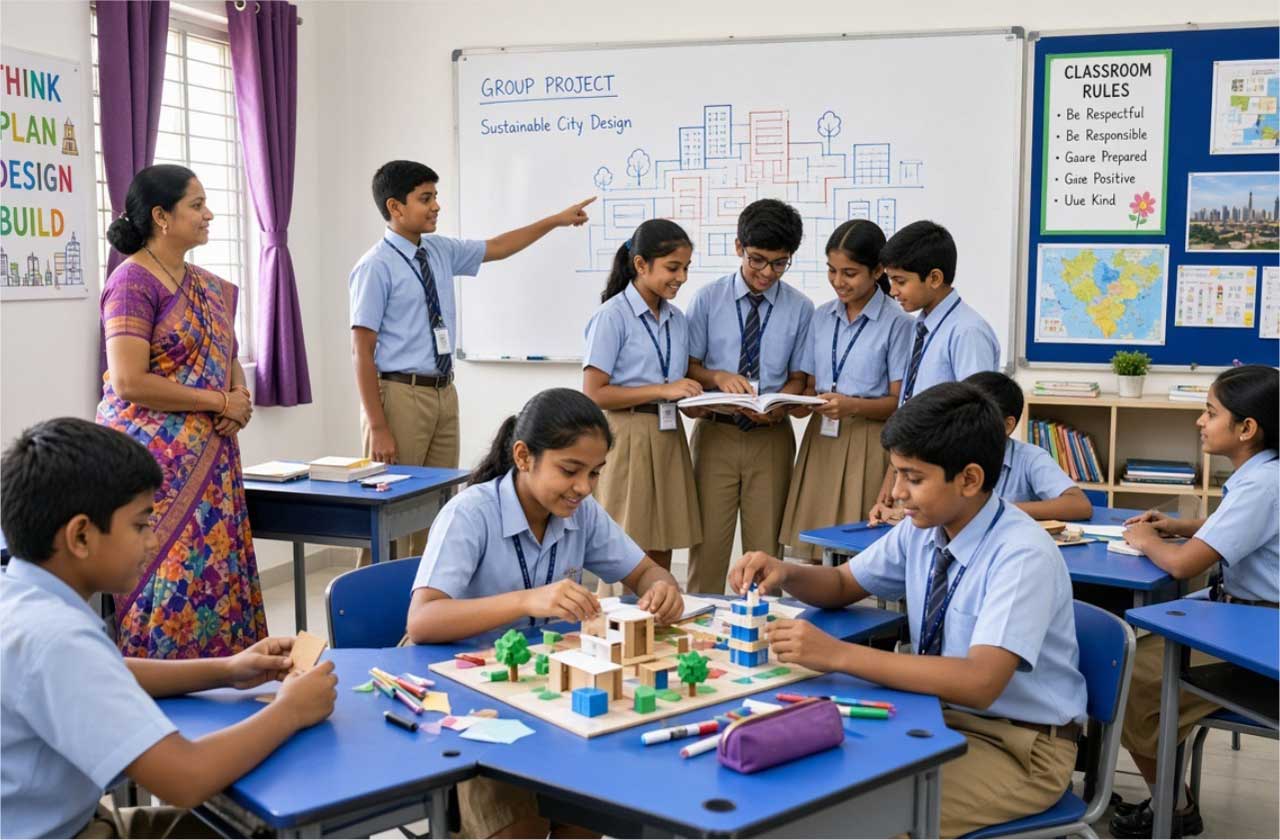
A student may not enjoy public performance but may still participate deeply in class discussions, science projects, reading activities, sports, peer learning, group work, art, writing, problem-solving tasks, leadership roles, and community activities. Another student may be quiet on stage but highly active in planning, organising, observing, designing, researching, or helping others.
This is why CBSE schools in Nerul should help parents and students understand participation in a wider way. True participation is not only about being visible in front of an audience. It is about being involved in learning, thinking, contributing, collaborating, and growing.
What does student participation really mean?
Student participation means active involvement in school life. It includes how students engage with lessons, activities, classmates, teachers, ideas, responsibilities, and opportunities.
It can happen inside and outside the classroom.
| Participation is often seen as | Participation also includes |
|---|---|
| Performing on stage | Asking questions in class |
| Giving speeches | Sharing ideas in group work |
| Winning competitions | Trying new activities |
| Joining debates | Helping classmates learn |
| Dancing or singing at events | Contributing to projects |
| Anchoring school programmes | Taking responsibility in class |
| Public speaking | Listening, observing, reflecting, and creating |
This wider understanding is important because not every student expresses confidence in the same way.
Why stage activities are not enough?
Stage activities are important, but they usually involve a smaller group of students. Some students enjoy performing, speaking, or presenting in front of others. Others may feel nervous, shy, or unsure. Some students may need time before they feel comfortable on stage.
If schools treat stage performance as the main form of participation, many students may feel left out. They may begin to believe that they are not active or confident simply because they do not perform publicly.
This can be unfair.
A student who asks thoughtful questions in class is participating. A student who helps organise a project is participating. A student who quietly contributes strong ideas in a group is participating. A student who improves in sports, art, reading, coding, writing, or teamwork is also participating.
Participation should recognise different strengths.
Different forms of student participation
CBSE schools in Nerul can encourage participation through many school experiences.
| Area of participation | Examples |
|---|---|
| Classroom participation | Asking questions, answering, discussing, reading aloud, solving problems |
| Academic participation | Projects, experiments, quizzes, presentations, peer learning |
| Creative participation | Drawing, writing, storytelling, craft, design, music, drama |
| Sports participation | Team games, fitness activities, athletics, discipline, cooperation |
| Leadership participation | Class duties, house activities, event roles, student councils |
| Social participation | Helping classmates, group tasks, inclusion, respectful communication |
| Digital participation | Creating presentations, coding activities, responsible technology use |
| Community participation | Cleanliness drives, awareness activities, social responsibility projects |
When participation is seen this way, more students get a chance to grow.
Participation should not become performance pressure
Sometimes, participation becomes another form of pressure. Students may feel they must be seen, selected, praised, or awarded. Parents may also compare students based on stage roles or competition results.
This can reduce the real value of participation.
Participation should not always be about winning, performing, or being noticed. It should help students learn, express, try, improve, and work with others.
| Pressure-based participation | Growth-based participation |
|---|---|
| Focuses only on selection | Gives opportunities to many students |
| Values only visible roles | Values effort and contribution |
| Creates comparison | Encourages personal growth |
| Rewards only performance | Recognises learning and involvement |
| Makes students anxious | Builds confidence gradually |
Schools should help students participate without fear of judgement.
Why classroom participation matters?
Classroom participation is one of the most important forms of student involvement. It shows whether students are listening, thinking, questioning, and connecting with the lesson.
A student who participates in class learns to express doubts, understand concepts, listen to others, and build confidence in daily learning.
Teachers can encourage classroom participation by:
- asking open-ended questions
- giving students time to think
- allowing pair discussions before full-class answers
- encouraging doubts without judgement
- appreciating effort
- giving quieter students smaller opportunities
- using activities and examples
- avoiding comparison between students
Classroom participation helps students become active learners instead of passive listeners.
Why group participation matters?
Group activities help students learn teamwork. However, group work should be structured properly. Otherwise, one or two confident students may do most of the work while others remain silent.
Teachers can make group participation meaningful by assigning clear roles.
For example:
| Group role | How it helps |
|---|---|
| Researcher | Finds information |
| Writer | Notes key points |
| Presenter | Shares the group's work |
| Timekeeper | Helps the group stay on track |
| Designer | Works on charts, slides, or visuals |
| Checker | Reviews the final work |
| Coordinator | Ensures everyone contributes |
This approach helps students understand that participation is not only about speaking. It is also about responsibility.
How teachers can encourage wider participation?
Teachers play an important role in helping students participate in different ways. They can create a classroom culture where students feel safe to try.
Teachers can:
| Teacher approach | How it supports students |
|---|---|
| Notice different strengths | Students feel valued beyond stage performance |
| Give varied opportunities | More students can participate |
| Encourage small steps | Shy students build confidence gradually |
| Avoid harsh correction | Students are less afraid of mistakes |
| Rotate responsibilities | Students experience different roles |
| Appreciate effort | Participation becomes less competitive |
| Support quiet students | Students do not feel ignored |
| Give constructive feedback | Students know how to improve |
A good teacher understands that one student may shine on stage, while another may shine in research, writing, design, sports, or problem-solving.
How schools can create inclusive participation?
Schools should design participation opportunities in a way that includes different personalities and strengths.
This can include:
- classroom discussions
- project-based learning
- science and maths activities
- reading clubs
- art and craft activities
- sports and fitness programmes
- debates and elocution
- music, dance, and drama
- student leadership roles
- peer learning sessions
- digital projects
- community activities
- innovation clubs
- environmental activities
The goal should be to give every student a meaningful role in school life.
How parents can support participation?
Parents should avoid judging participation only by stage appearances or prizes. A student who is not performing on stage may still be learning, contributing, and growing in other ways.
Parents can ask:
- Did you take part in any class activity today?
- Did you ask a question?
- Did you help your group?
- Did you try something new?
- What role did you play in the activity?
- Did you feel comfortable participating?
- What would you like to try next?
These questions help students reflect on participation in a positive way.
Parents should also avoid saying things like, "Why were you not selected?" or "Why can't you perform like others?" Such comments may reduce confidence. Instead, parents can say, "What did you enjoy?" or "What can you try next time?"
Questions parents can ask during admission
During CBSE school admission in Nerul, parents can ask how the school encourages participation for different kinds of students.
Useful questions include:
| Question parents can ask | Why it matters |
|---|---|
| Does the school offer participation opportunities beyond stage events? | Shows whether participation is inclusive |
| How are shy students encouraged to participate? | Shows whether the school supports gradual confidence |
| Are classroom discussions and group activities regular? | Shows whether students are active learners |
| Do all students get opportunities in activities? | Shows whether participation is broad-based |
| Are leadership roles rotated? | Shows whether different students get responsibility |
| How does the school recognise effort, not only winning? | Shows whether growth is valued |
| How are parents informed about student participation? | Shows school-home communication |
These questions help parents understand the school's approach to holistic development.
At Podar International School in Nerul, we believe that student participation should be inclusive, meaningful, and connected to overall growth. Our teachers encourage students to participate not only in stage activities, but also in classroom discussions, group projects, sports, creative work, leadership roles, peer learning, and everyday school experiences.
The focus is to help students build confidence at their own pace. Students are guided to express ideas, ask questions, work with others, take responsibility, and discover their strengths through different opportunities. The aim is not to make every student participate in the same way, but to help every student feel involved, valued, and supported.
For parents exploring CBSE school admission in Nerul, please get in touch with our team.
Email Address: admissions@podar.org
Telephone No: 9511939385
Topics


