


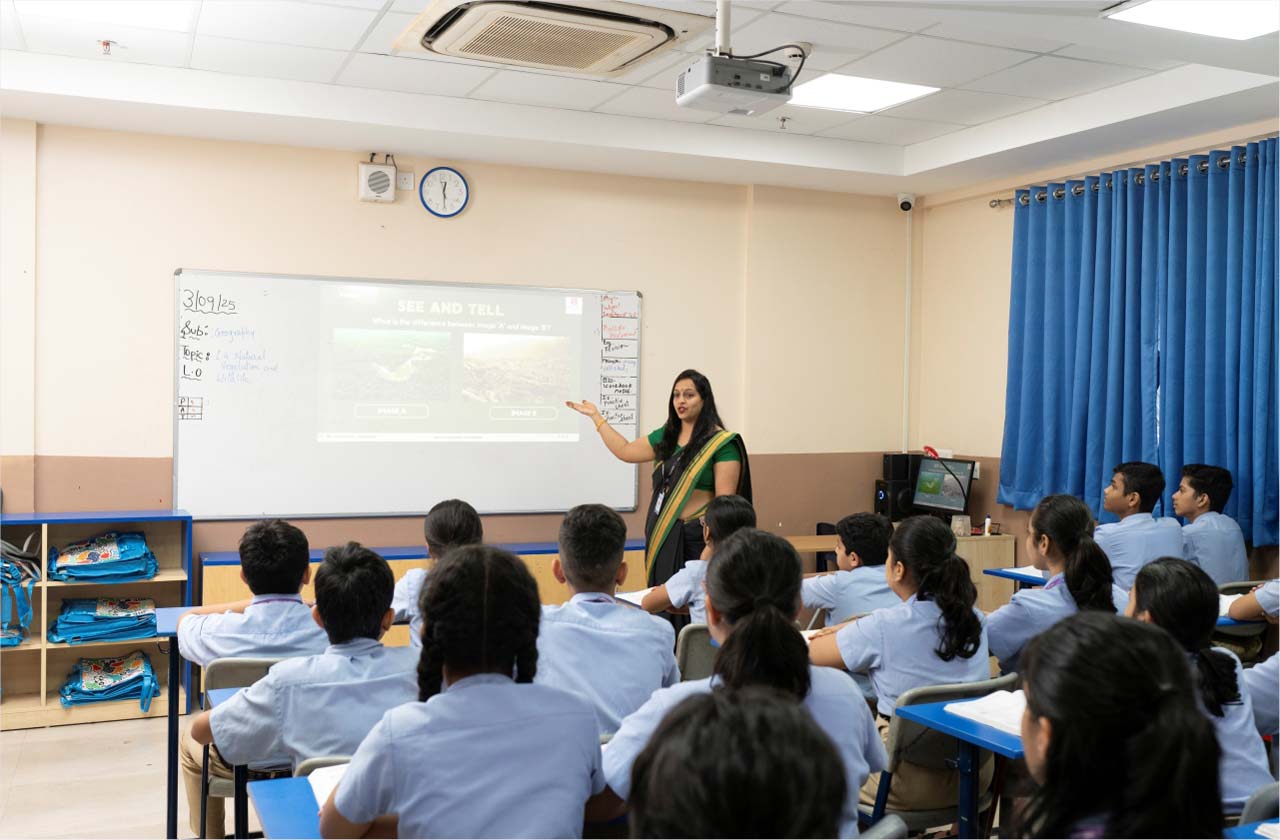
Why Parents Should Ask About Student Well-being Before School Admission in Solapur
When parents look for school admission in Solapur, they usually ask about academics, board results, infrastructure, transport, safety, activities, and fees. These are important factors. However, one more question deserves equal attention: how does the school support student well-being?
Student well-being is not a separate issue from education. It affects how students learn, participate, communicate, handle pressure, build friendships, and respond to challenges. A student who feels emotionally safe and supported is more likely to ask questions, take part in activities, seek help, and learn with confidence.
This is why parents should discuss well-being before choosing a school, not only after a problem appears.
What does student well-being mean?
Student well-being refers to the overall emotional, social, physical, and academic comfort of a student. It includes how safe students feel in school, how they manage stress, how they build friendships, how teachers respond to concerns, and whether students feel respected in the classroom.
It is not limited to counselling or mental health support. It also includes daily classroom culture, teacher-student communication, peer behaviour, discipline style, activity balance, and parent-school communication.
| Area of well-being | What parents should observe |
|---|---|
| Emotional well-being | Does the student feel heard, respected, and supported? |
| Social well-being | Are friendships, peer behaviour, and classroom culture healthy? |
| Academic well-being | Is academic pressure managed with guidance, not fear? |
| Physical well-being | Are safety, rest, activity, and health needs considered? |
| Digital well-being | Are students guided on screen habits, cyber safety, and digital behaviour? |
A school that focuses on student well-being helps students grow as learners and as individuals.
Do official education bodies recognise student well-being?
Yes. Student well-being is increasingly recognised as an important part of education in India.
The National Education Policy 2020 highlights holistic development and recognises that education should build not only cognitive skills, but also social, emotional, and ethical capacities. It refers to skills such as critical thinking, problem-solving, empathy, perseverance, teamwork, leadership, and communication.
The Ministry of Education's Manodarpan initiative focuses on the mental health and psychosocial well-being of students, teachers, and families. It also encourages parents to stay in regular contact with teachers or counsellors for continuous support.
CBSE has also promoted mental health, wellness, and social-emotional learning in schools. Its 2026 circular refers to building a school ecosystem that prioritises mental health and supports students academically, emotionally, and socially.
These references show that well-being is not an optional add-on. It is becoming an important part of how schools support student development.
Why should parents ask about well-being during admission?
Admission is the right time to understand the school's approach. Once a student joins a school, daily routines, peer groups, teacher interactions, discipline practices, and academic expectations begin to shape the student's experience.
Parents should not wait for signs of stress, fear, bullying, low confidence, or academic pressure before asking questions. A school's well-being approach should be understood early.
For parents exploring school admission in Solapur, this can help them choose a school that supports both learning and emotional growth.
Questions parents should ask before school admission in Solapur?
Parents can ask simple but important questions during the admission process.
| Question parents can ask | Why it matters |
|---|---|
| How does the school support student well-being? | Shows whether well-being is part of school culture |
| Is there a counsellor or trusted adult whom students can approach? | Helps parents know whether students have support |
| How do teachers identify students who seem stressed or withdrawn? | Shows whether teachers observe emotional changes |
| How does the school handle bullying, teasing, or exclusion? | Helps parents understand peer safety |
| How is academic pressure managed? | Shows whether learning is guided calmly |
| How does the school communicate concerns to parents? | Builds trust between home and school |
| Are students encouraged to participate beyond academics? | Supports confidence and social development |
| How does the school support students who are shy or easily overwhelmed? | Shows sensitivity to different student needs |
| Are life skills and emotional awareness discussed? | Helps students build resilience and self-control |
| How does the school balance discipline with emotional safety? | Shows whether correction is respectful |
These questions help parents look beyond surface-level facilities. They help parents understand how the school actually supports students every day.
Why well-being affects learning
A student who is anxious, afraid, isolated, or under constant pressure may find it difficult to focus. Even a bright student can struggle if the classroom environment feels stressful or unsafe.
Well-being supports learning in many ways.
| When well-being is supported | How it helps learning |
|---|---|
| Students feel safe | They are more willing to ask questions |
| Students feel respected | They participate with more confidence |
| Students can seek help | Problems are addressed earlier |
| Students are not afraid of mistakes | They learn through correction |
| Students have healthy peer relationships | They feel more comfortable in school |
| Students manage pressure better | They prepare with more consistency |
Marks are important, but students need the right emotional environment to perform well over time.
How schools in Solapur can support student well-being
Schools can support well-being through regular systems, not only occasional talks. A strong well-being approach should be visible in classroom behaviour, teacher communication, student activities, and parent engagement.
Schools can help by:
| School approach | How it helps students |
|---|---|
| Positive classroom culture | Students feel respected and included |
| Approachable teachers | Students feel comfortable asking for help |
| Counselling support | Students can discuss emotional, academic, or peer concerns |
| Anti-bullying awareness | Students understand respectful behaviour |
| Life skills activities | Students learn decision-making, empathy, and self-control |
| Balanced activity exposure | Students build confidence beyond academics |
| Calm correction | Students learn from mistakes without fear |
| Regular parent communication | Concerns are noticed and addressed early |
CBSE affiliation bye-laws also refer to life skills education, health and physical education, value education, digital education, and the appointment of counsellor and wellness teachers as part of school functioning. This supports the idea that student development should be broader than academic instruction alone.
How teachers can make well-being part of daily learning
Teachers are often the first to notice changes in student behaviour. A student who stops participating, sits alone, avoids group work, or becomes unusually anxious may need gentle attention.
Teachers can support well-being by:
- greeting students warmly
- listening without immediate judgement
- allowing students to ask questions
- helping students correct mistakes calmly
- encouraging respectful peer behaviour
- noticing students who are left out
- giving feedback that guides improvement
- avoiding public humiliation
- recognising effort, not only high marks
A small response from a teacher can make a big difference to how a student feels in school.
How parents and schools can work together
Student well-being needs consistency between school and home. If a school encourages calm communication but the student faces constant pressure at home, the benefit reduces. Similarly, if parents are supportive but school feels harsh or unapproachable, the student may still struggle.
Parents and schools can collaborate in practical ways.
| What schools can do | What parents can do |
|---|---|
| Share regular feedback on student behaviour and participation | Stay open to feedback without becoming defensive |
| Inform parents about changes in confidence or classroom interaction | Share changes noticed at home |
| Conduct parent orientation on well-being and emotional safety | Attend sessions and ask questions |
| Provide access to counsellors or wellness support | Encourage students to seek help when needed |
| Discuss academic pressure calmly | Avoid creating fear around marks |
| Encourage balanced routines | Support sleep, play, reading, and family time |
The goal is not to label students. The goal is to understand them better.
What parents should look for when visiting a school
During school visits or admission discussions, parents can observe small details.
They can notice:
- how teachers speak to students
- whether students appear comfortable asking questions
- whether classrooms feel respectful
- how discipline is explained
- whether the school discusses counselling or wellness support
- whether peer behaviour is taken seriously
- whether parent communication is structured
- whether activities support confidence and social development
These observations can help parents understand whether the school's environment feels supportive.
At Podar International School in Solapur, we believe that student well-being is closely connected with future readiness. Students need more than academic knowledge to succeed. They also need confidence, communication skills, resilience, empathy, self-awareness, teamwork, and problem-solving abilities. These skills develop better when students feel safe, supported, and respected in their school environment. A student who feels emotionally secure is more likely to take initiative, speak clearly, work well with others, manage setbacks, ask for help, learn from feedback, adapt to change, and make thoughtful choices. This is why well-being is not separate from future success. It is one of the foundations on which long-term growth is built.
To know more about our school's approach to academics, student well-being, classroom environment, activities, facilities, and admission process, please get in touch with our team.
Email Address: admissions@podar.org
Telephone No: 6366437890
Topics


