


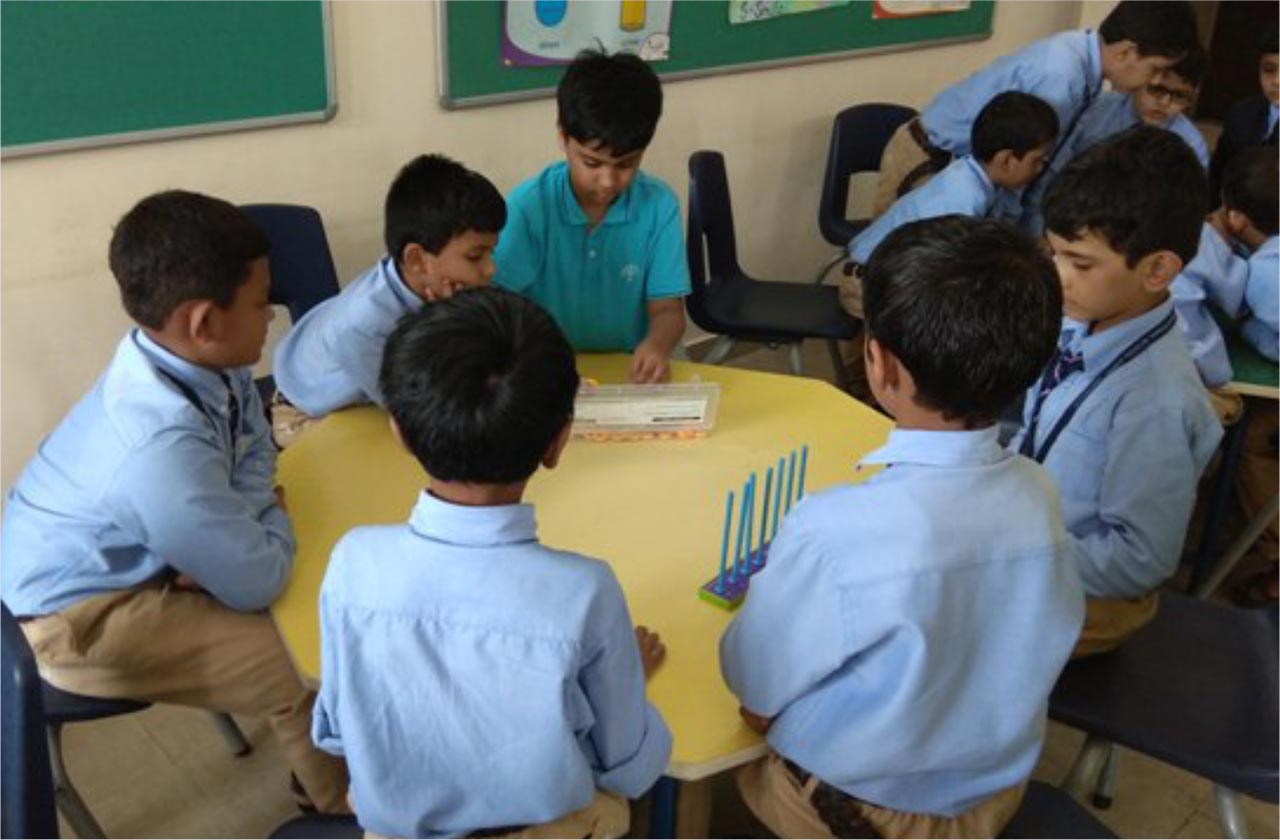
Should Schools in Navsari Teach Students How to Respect Different Opinions?
Students meet different people, ideas, habits, languages, beliefs, and ways of thinking in school. Some classmates may agree with them. Some may see things differently. Some may answer questions in another way. Some may come from different family backgrounds or have different interests.
This is why learning to respect different opinions is important.
Respecting different opinions does not mean agreeing with everything. It means listening without mocking, disagreeing without insulting, and understanding that people can think differently while still treating each other with dignity.
For parents exploring schools in Navsari, this is an important point to consider. A school should not only teach subjects. It should also help students build the values, communication skills, and emotional maturity needed to live and work with others.
What does it mean to respect different opinions?
Respecting different opinions means giving others the space to express their thoughts. It means students learn to listen before responding. They may still disagree, but they do so politely.
For example, two students may have different views during a class discussion. One may support one idea, while another may suggest a different approach. A respectful student listens, thinks, and responds with reason. The student does not laugh, interrupt, or make the other person feel small.
| Respecting opinions means | It does not mean |
|---|---|
| Listening patiently | Agreeing with everyone |
| Asking questions respectfully | Staying silent when something is wrong |
| Disagreeing politely | Accepting harmful behaviour |
| Understanding another viewpoint | Giving up personal values |
| Speaking with kindness | Avoiding all discussion |
This distinction is important. Students should learn that respect and independent thinking can go together.
Why students should learn this early
Students build social habits early. If they learn to dismiss, mock, or ignore different opinions in school, they may carry the same behaviour into higher education, friendships, workplaces, and public life.
On the other hand, when students learn respectful disagreement early, they become better listeners and more thoughtful speakers. They also become more confident because they learn that their own opinion can be expressed calmly, without hurting others.
Respecting different opinions helps students build:
| Skill | How it helps |
|---|---|
| Communication | Students learn to express thoughts clearly and politely |
| Empathy | Students understand that others may have different experiences |
| Teamwork | Students work better with classmates |
| Confidence | Students learn to share their own views respectfully |
| Problem-solving | Students compare ideas and choose better solutions |
| Emotional control | Students learn not to react angrily to disagreement |
| Leadership | Students learn to include different voices |
These skills are useful inside and outside the classroom.
Why disagreement is not a problem
Many students think disagreement means conflict. This is not always true. Disagreement can be healthy when it is handled properly.
In fact, discussions become more meaningful when students hear different views. A science project may improve when students suggest different methods. A group activity may become stronger when students compare ideas. A class discussion may become richer when students bring different examples.
The problem is not disagreement. The problem is disrespect.
| Healthy disagreement | Disrespectful behaviour |
|---|---|
| "I see it differently because…" | "That is a stupid idea." |
| "Can you explain your point?" | Interrupting while someone speaks |
| "I agree with part of what you said." | Laughing at another student |
| "Let us compare both ideas." | Refusing to listen |
| "Maybe we can find a better solution." | Making the discussion personal |
Schools should help students understand this difference.
Common mistakes students make
Students may not always intend to be disrespectful. Sometimes, they simply do not know how to respond to a different opinion. They may copy how friends speak. They may become defensive. They may think that proving someone wrong is the same as being smart.
Common mistakes include:
| Mistake | Why it can be harmful |
|---|---|
| Interrupting classmates | It makes others feel unheard |
| Laughing at different answers | It reduces confidence |
| Calling an opinion "wrong" immediately | It stops discussion |
| Making personal comments | It turns disagreement into conflict |
| Following the loudest student in the group | Quieter students may not share useful ideas |
| Refusing to change one's view | It limits learning |
| Treating difference as disrespect | It creates unnecessary tension |
Students need guidance to avoid these mistakes.
How schools in Navsari can teach respect for different opinions
Schools in Navsari can teach this through everyday classroom behaviour. It does not need to be limited to moral science lessons. It can be practised in discussions, group work, activities, assemblies, debates, projects, and even daily conversations.
1. Create classroom rules for respectful discussion
Teachers can set simple rules before discussions:
- listen without interrupting
- disagree with the idea, not the person
- use polite language
- ask questions before judging
- allow everyone a chance to speak
- avoid laughing at mistakes
When these rules are repeated regularly, students begin to follow them naturally.
2. Encourage students to explain their views
Students should not only say what they think. They should also learn to explain why they think that way. This builds reasoning.
For example, instead of saying, "I like this answer," a student can be encouraged to say, "I think this answer works because…"
This helps students move from reaction to reflection.
3. Use group activities carefully
Group work can teach respect if it is guided well. Teachers can assign roles so that every student gets a chance to contribute. One student may present. Another may write. Another may collect ideas. Another may check details.
This prevents one or two confident students from dominating the group. It also teaches students to value different contributions.
4. Teach students how to disagree politely
Students need actual phrases they can use. Teachers can help them practise lines such as:
- "I understand your point, but I think…"
- "Can we also consider another idea?"
- "I agree with this part, but I have a different view on…"
- "Maybe both ideas can work in different situations."
- "Can you explain why you think so?"
These phrases make disagreement less harsh.
5. Use stories and real-life examples
Stories, case studies, classroom situations, and role plays can help students understand respect better. A teacher can present a situation where two students disagree and ask the class: What went wrong? How could they have handled it better?
This makes the lesson practical.
Why respect for opinions supports emotional safety
Students open up better when they know their views will not be laughed at. If classmates mock answers or opinions, students may stop participating. This can affect confidence, learning, and classroom engagement.
A respectful classroom helps students feel emotionally safe. They are more willing to ask doubts, share ideas, participate in discussions, and work with others.
This is especially important for shy students, sensitive students, or students who take time to speak. They may have good ideas, but they need a safe space to express them.
What parents should ask during admission
Parents exploring school admission in Navsari can ask specific questions about classroom culture and student behaviour.
| Question parents can ask | Why it matters |
|---|---|
| How does the school encourage respectful classroom discussions? | Shows whether students are taught to listen |
| Are students encouraged to ask questions and share views? | Shows whether classroom culture is open |
| How do teachers handle disagreement between students? | Shows whether conflict is guided properly |
| Are group activities structured to include all students? | Shows whether different voices are valued |
| How does the school address teasing or mocking? | Shows whether emotional safety is protected |
| Are values like empathy and respect part of daily learning? | Shows whether character development is supported |
| How are parents informed about behaviour concerns? | Shows school-home collaboration |
These questions help parents understand whether the school builds not only academic skills, but also social and emotional maturity.
At Podar International School in Navsari, we believe that students learn best in an environment where they feel heard, respected, and encouraged to think. Our teachers help students understand that different opinions are a natural part of learning. Through classroom discussions, group activities, projects, and daily interactions, students are guided to listen patiently, speak politely, and disagree respectfully.
The focus is not only on academic learning, but also on helping students build empathy, confidence, communication skills, teamwork, and responsible behaviour. When students learn to respect different opinions, they become better classmates, better learners, and more thoughtful individuals. To know more about our school and the admission process, please get in touch with our team.
Email Address: admissions@podar.org
Telephone No: 6366437875
Topics


