


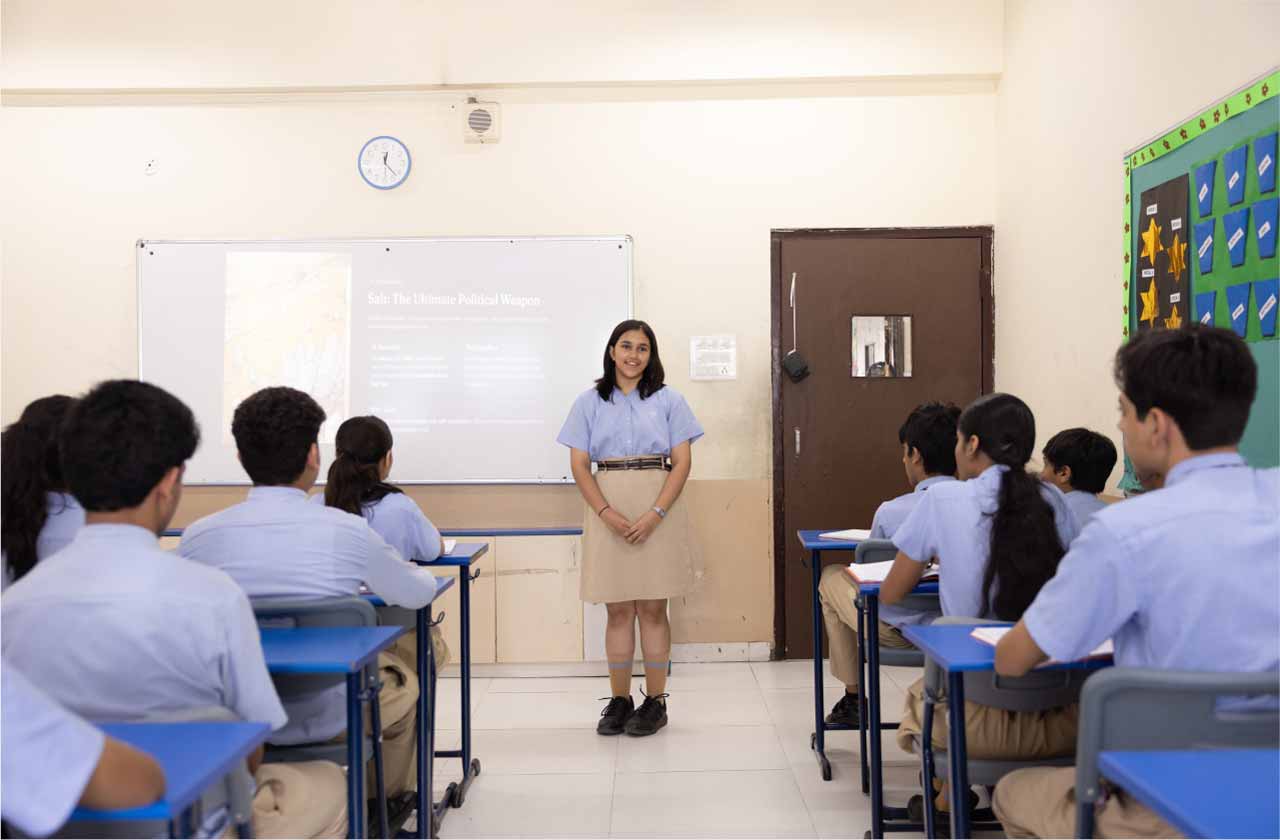
Confidence is often misunderstood by students. Many students think confidence means speaking loudly, giving quick answers, taking charge in every group or always being seen by others. But confidence does not always have to be loud. A calm student can also be confident. A quiet student can have strong ideas. A student who listens before speaking can still be sure of themselves. A student who accepts feedback without feeling small is also showing confidence. This is why the best schools in Akola should help students understand that confidence can be calm. Real confidence is not about trying to impress everyone. It is about feeling secure enough to participate, learn, ask questions and improve.
Why students often connect confidence with loudness?
Students may think loud behaviour is confidence because it gets noticed quickly. In class, the student who answers first may look confident. In group work, the student who speaks the most may appear like a leader. During activities, the student who performs easily may seem more capable. This can make other students doubt themselves. Some students may start thinking, “I am not confident because I do not speak loudly.” Others may feel pressure to become more forceful. Some may begin to interrupt, dominate or speak without thinking. Schools need to correct this idea early. Confidence is not measured only by volume. It is measured by self-belief, preparation, respect and the ability to keep trying.
What calm confidence really means?
Calm confidence can be seen in small classroom habits. It is there when a student asks a question politely instead of staying confused. It is there when a student listens before answering. It is also there when a student speaks clearly, without trying to be the loudest person in the room.
From a student’s point of view, calm confidence sounds like this: “I do not have to answer first to prove myself. I can take a moment, think properly and then share my ideas.” It also shows when students accept feedback without feeling discouraged. A student can think, “This correction does not mean I am not good enough. It shows me what I can improve.” That is confidence too. Calm confidence also means trying again after mistakes. It means staying respectful during disagreement. It means helping others participate without feeling the need to dominate the group.
For students, the real shift is simple. They begin to understand that confidence is not about attention. It is about feeling secure enough to learn, improve, listen and speak with respect.
Why does calm confidence matter in the digital age?
Calm confidence matters even more in the digital age because students are constantly exposed to quick opinions, fast reactions and public comparison. The loudest comment may get noticed first. The quickest reply may seem smart. The most active student may appear more confident. But digital life also needs judgement.
Students should know how to pause before replying, think before posting and check before sharing. They should not feel pressured to react immediately just because others are doing so. Calm confidence helps students stay steady in such situations.
A calmly confident student can say, “I do not need to prove myself in every conversation.” The student can ignore unnecessary arguments, avoid rude online behaviour and express opinions respectfully. They can also accept that not every post, comment or comparison needs a response.
This is important because confidence in the digital age is not about being constantly visible. It is about knowing when to speak, when to listen, when to step back and when to ask for help. Students who learn this early are better prepared for online communication, group chats, digital learning, social media and future professional spaces.
How teachers can build calm confidence?
Teachers in Akola play a major role in shaping how students understand confidence. A classroom can either reward only loud participation or encourage thoughtful participation. Teachers can help by valuing different ways of contributing. Some students may answer quickly. Some may need time. Some may speak better in small groups. Some may express themselves through writing, art, projects or careful observation. All these forms of participation matter.
Teachers can build calm confidence by:
| Teacher Strategy | Classroom Example | How it builds calm confidence |
|---|---|---|
| Give students time to think | After asking a question, the teacher gives students a few seconds to think before taking answers. | Students learn that they do not have to rush. They can organise their thoughts and answer with clarity. |
| Encourage questions without judgement | The teacher says, “It is okay if the doubt feels small. Asking helps everyone learn.” | Students feel safer asking questions. They stop seeing doubts as a weakness. |
| Appreciate effort, not only correct answers | A teacher says, “Your method is improving. Let us correct this one step.” | Students learn that progress matters. They do not link confidence only with being right. |
| Correct students respectfully | Instead of saying, “This is wrong,” the teacher says, “You are close. Let us look at this part again.” | Students accept corrections without feeling embarrassed. |
| Give quieter students smaller speaking opportunities | A quiet student first shares an answer with a partner, then with a small group and later with the class. | Students build confidence gradually. They do not feel forced into sudden public speaking. |
| Rotate leadership roles | In group work, different students take turns as organiser, presenter, writer, reviewer or timekeeper. | Students understand that leadership is not only for the loudest person. |
| Teach students to listen before replying | During discussions, students must first repeat the other person’s point before sharing their view. | Students learn respectful communication. They understand that confidence includes listening. |
| Help students reflect after mistakes | After a test or activity, students write one thing they did well and one thing they will improve. | Students see mistakes as learning signals. They do not feel defeated by them. |
| Avoid public comparison | Instead of comparing two students, the teacher discusses each student’s individual progress. | Students focus on their own growth. They do not feel smaller because someone else is ahead. |
How parents can support calm confidence?
Parents also shape how students see confidence. Sometimes, parents may compare students with others who speak more, perform more or win more. This can make students feel that quiet confidence has no value. Parents should avoid saying, “Why can’t you speak like that student?” or “You should always be first to answer.”
Instead, they can say:
- “Your idea matters.”
- “Take your time and explain it clearly.”
- “It is okay to ask for help.”
- “Confidence grows with practice.”
- “You do not have to be loud to be confident.”
Parents can also ask simple questions at home:
- Did you ask a question today?
- Did you share an idea?
- Did you listen to someone else?
- Did you try again after a mistake?
- Did you speak respectfully during disagreement?
These questions help students reflect without pressure.
During school admission in Akola, parents can ask how the school builds student confidence.
Useful questions include:
- How does the school encourage quiet students to participate?
- How do teachers give feedback?
- Are students compared with each other?
- How are classroom discussions managed?
- Are students given small leadership opportunities?
- How does the school help students after mistakes?
- Does the school value listening as much as speaking?
- How are students encouraged to express ideas respectfully?
These questions help parents understand whether confidence-building is part of the school culture.
At Podar International School in Akola, the focus is on helping students build confidence with respect, patience and responsibility. Students are encouraged to ask questions, participate in discussions, express ideas, listen to others and learn from feedback. The aim is not to make every student behave the same way. Some students are expressive. Some are thoughtful. Some need time before they speak. Teachers guide students to build confidence in ways that suit their personality and learning style. The school also works closely with parents. This helps students receive consistent support at home and in the classroom.
To know more about Podar International School in Akola and the admission process, please get in touch with our team.
Email Address: admissions@podar.org
Telephone No: 6366437984

