


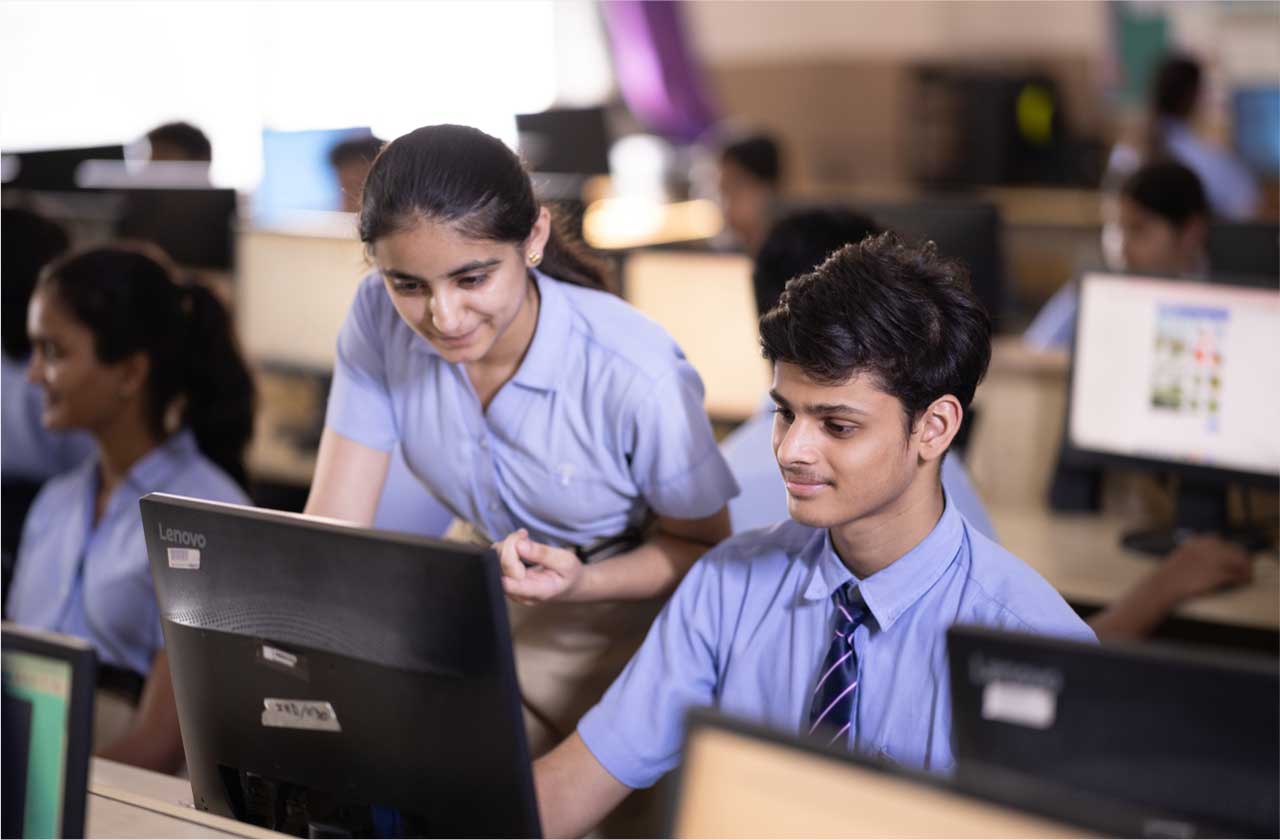
Technology is changing how people work. New roles are emerging and old roles are changing. Earlier, many jobs looked fixed. An engineer worked mainly with machines. A salesperson worked mainly with customers. A designer worked mainly with creative ideas. Now, many roles need a mix of skills. An engineer may use machines, software, data and teamwork. A teacher may use digital tools, communication skills and student data. A business manager may work with teams, customers, reports and technology. This is why schools in Vapi should help students understand workplace skills early. Students should not think of careers only as job titles. They should also understand the skills needed to grow in those careers.
What are workplace skills?
Workplace skills are not limited to one career. They are useful across many fields. A doctor needs communication and empathy. An engineer needs problem-solving and teamwork. A designer needs creativity and feedback. A teacher needs patience and planning. A business leader needs decision-making and people skills. A data professional needs analysis and ethical judgement.
So, workplace skills are not separate from academic learning. They support it.
| Workplace skill | What it means for students |
|---|---|
| Communication | Explaining thoughts clearly and respectfully |
| Collaboration | Working with others without dominating or withdrawing |
| Problem-solving | Finding solutions instead of giving up quickly |
| Critical thinking | Asking whether information is correct and useful |
| Creativity | Thinking of new ideas and better approaches |
| Digital awareness | Using technology safely and thoughtfully |
| Adaptability | Staying open to change and new learning |
| Time management | Planning tasks and completing work responsibly |
| Emotional maturity | Managing stress, feedback and disagreement |
| Ethical judgement | Making fair, honest and responsible choices |
These skills help students become more prepared for changing industries.
Which workplace skills matter in fast-changing industries?
Employers are looking for people who can think, learn and adapt. They are also looking for people who can work well with others.
The World Economic Forum’s Future of Jobs Report 2025 highlights analytical thinking as a leading core skill for employers. It also points to rising demand for AI and big data, technological literacy, creative thinking, resilience, flexibility, agility, leadership and social influence.
LinkedIn’s 2026 Skills on the Rise report also shows that people skills remain important. It highlights areas such as cross-functional collaboration, team management, mentorship and executive and stakeholder communication.
For schools in Vapi, the message is clear. Students need both digital skills and human skills. They need to know how to use tools. They also need to know how to think, communicate and work with people.
Why students should know about these skills early?
Career awareness should not begin only after Class X or Class XII. By then, students may already feel pressure. They may choose subjects only because friends chose them. They may follow popular careers without understanding what those careers need. Early awareness helps students explore calmly.
A student does not need to choose a career in middle school. But the student can begin to understand how skills matter. For example, a student who enjoys organising activities may have early leadership skills. A student who explains ideas clearly may have communication strengths. A student who likes solving puzzles may enjoy analytical thinking. A student who enjoys helping classmates may have empathy and teamwork skills. When students notice these strengths early, they make better choices later.
The National Education Policy 2020 also highlights life skills such as communication, cooperation, teamwork and resilience. It also speaks about creativity, critical thinking and technology use in teaching and learning.
This supports the idea that schools should build skills along with academic knowledge.
How schools in Vapi can talk about workplace skills?
Schools should not present workplace skills as heavy career advice. Students may find that boring or stressful. Instead, schools can connect skills with daily school life.
For example, teamwork can be discussed during group projects. Communication can be discussed during presentations. Problem-solving can be discussed during maths, science or practical activities. Digital awareness can be discussed during research work. Time management can be discussed before exams and project submissions.
Teachers can ask simple questions:
- What skill did you use in this activity?
- Did you listen to your group?
- Did you explain your idea clearly?
- Did you manage your time well?
- Did you check whether the information was reliable?
- Did you learn from feedback?
- What would you do differently next time?
These questions help students see that skills are built through practice.
How to make students interested?
Students become more interested when workplace skills feel real. They should not feel like abstract words. Schools in Vapi can make the topic engaging through examples, activities and stories. For instance, students can study how a team launches a product. They can explore how a hospital manages patients. They can discuss how a sports team prepares for a tournament. They can understand how a shop handles customers. They can analyse how a start-up solves a problem. These examples show that workplace skills are used everywhere.
Schools can also use classroom activities.
| Activity | Workplace skill developed |
|---|---|
| Group project | Collaboration, planning and responsibility |
| Class presentation | Communication and confidence |
| Debate or discussion | Listening and respectful disagreement |
| Science experiment | Problem-solving and observation |
| Research assignment | Critical thinking and source-checking |
| Student council role | Leadership and accountability |
| Community project | Empathy, teamwork and communication |
| Digital poster or video | Creativity and digital awareness |
| Time-bound classroom task | Time management and focus |
| Reflection after feedback | Emotional maturity and improvement |
When students experience these skills, they understand them better.
Common mistakes students should avoid
Students may misunderstand workplace skills if they only look at career success from the outside.
They should avoid these mistakes:
| Mistake | Better understanding |
|---|---|
| Thinking marks are enough | Marks matter, but skills help students use knowledge well |
| Thinking communication means speaking loudly | Communication means speaking clearly and listening well |
| Thinking leadership means giving orders | Leadership means responsibility, guidance and respect |
| Thinking digital skills mean only using apps | Digital skills also need safety, judgement and ethics |
| Thinking creativity is only for art students | Creativity helps in science, business, technology and problem-solving |
| Thinking teamwork means one student does everything | Real teamwork means shared responsibility |
| Thinking failure means the end | Feedback and mistakes can support improvement |
Schools should help students understand these differences early.
Why adaptability matters most?
Industries will keep changing. Some tools that students use later may not even exist now. This is why adaptability is important. Adaptability means being willing to learn, unlearn and improve. It means not feeling scared when a new tool, subject or method appears.
A student with adaptability can say:
- I can learn this step by step.
- I do not know this yet, but I can ask.
- I made a mistake, but I can improve.
- This method is new, so I need practice.
- I can work with different people.
This mindset will help students across careers.
How parents can be brought into the conversation?
Parents play an important role. Many parents may ask about marks, subjects and exam preparation. These are important. But they should also ask how the school builds future-ready skills. Schools in Vapi can involve parents through orientation sessions, parent-teacher meetings, project showcases and career awareness sessions. Teachers can explain how classroom activities build communication, teamwork, patience, problem-solving and responsibility.
Parents can also support these skills at home.
They can ask:
- What did you learn from your group work?
- Did you explain your idea clearly?
- Did you complete your task on time?
- Did you listen to someone else’s view?
- Did you check the information before using it?
- What feedback did your teacher give?
- What will you improve next time?
These questions help students reflect on skills, not only marks.
What parents should ask during admission?
During school admission in Vapi, parents can ask:
- How does the school build communication skills?
- Are students given group projects?
- How does the school teach digital responsibility?
- Do students get chances to present their ideas?
- How are leadership opportunities rotated?
- Does the school help students learn from feedback?
- How does the school prepare students for changing career trends?
- Are practical learning and career awareness part of school life?
- How are parents informed about student development beyond marks?
These questions help parents understand the school’s approach to overall growth.
At Podar International School in Vapi, the focus is on helping students build academic strength along with future-ready skills. Students are encouraged to communicate clearly, work with others, ask questions, solve problems, use digital tools responsibly and learn from feedback. Teachers guide students through classroom learning, projects, discussions, activities and regular feedback. The aim is not to pressure students into choosing careers early. The aim is to help them understand how skills connect with future possibilities. The school also works closely with parents. This helps students receive consistent support at home and in the classroom.
To know more about our school and the admission process, please get in touch with the team.
Email Address: admissions@podar.org
Telephone No: 6366437895

