


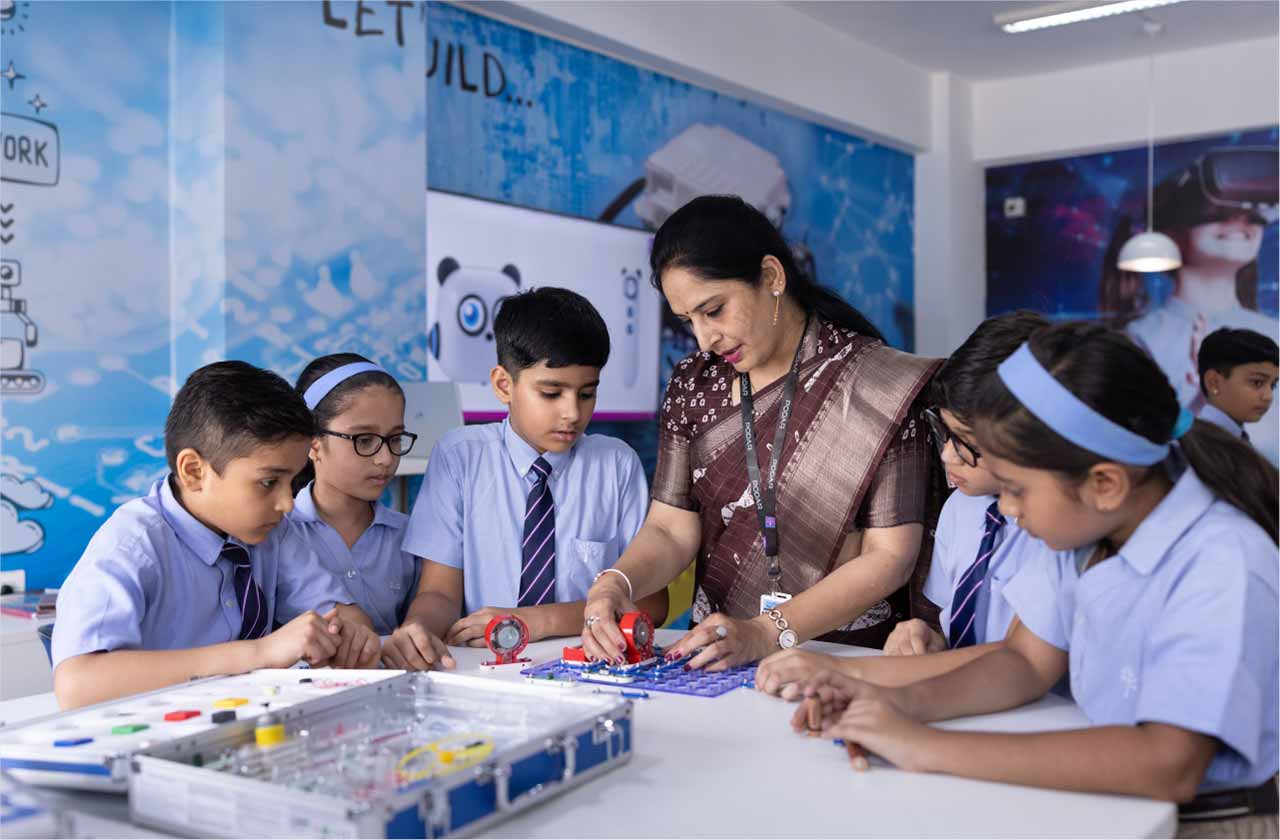
Students are growing up in an age of quick searches, instant replies, and short-form content. They can search online within seconds. They can watch short videos. They can use digital tools for instant help. These things are useful. But not every part of learning is instant. Some skills take time. Some answers need thinking. Some projects need planning, testing, correction and teamwork. This is why CBSE schools in Baramati should help students build patience through project work. Project work gives students a practical way to understand that meaningful learning takes effort. It teaches them to stay with a task, try again, listen to feedback and improve step by step.
Why patience is important for students?
Patience is often misunderstood. It does not mean waiting quietly and doing nothing. It also does not mean accepting delays without effort. For students, patience means staying steady when learning takes time. Some lessons are easy to understand. Others need practice. Some projects work well on the first attempt. Others need changes, corrections and fresh thinking. This is where patience helps.
A teacher can guide students by saying, “You do not have to get it right immediately. What matters is that you are willing to try again.” A patient student learns to pause before giving up. The student can try again after a mistake. The student can listen to another idea during group work. The student can revise a project without feeling defeated. The student can complete a task carefully, even when it feels difficult.
Patience helps students in many areas. In learning, it gives them time to understand. In exams, it helps them avoid careless mistakes. In project work, it helps them plan, improve and complete tasks properly. In group activities, it helps them listen and adjust. In creative work, it helps them revise ideas before finalising them. In sports and activities, it teaches them to practise without expecting instant success.
Most importantly, patience supports emotional growth. Students learn that frustration is normal. They also learn that difficulty does not mean failure.
What project work can schools conduct?
CBSE schools in Baramati can use different kinds of project work to help students build patience. These projects should be age-appropriate and clearly connected to classroom learning. A project should not feel like extra decoration. It should help students understand a concept better and help them plan, observe, try, correct and improve. Good project work teaches students that learning has stages.
Project stage: What students learn
This process naturally builds patience.
- Understanding the topic: Students learn to pause before starting.
- Collecting ideas: Students learn to explore different sources.
- Planning the work: Students learn to organise their thoughts.
- Creating the project: Students learn to stay with the task.
- Testing or reviewing: Students learn that first attempts may need correction.
- Taking feedback: Students learn to listen without feeling defeated.
- Improving the work: Students learn that good work takes time.
Types of project work schools can conduct
| Project Type | Activities / Focus | Key Learning |
|---|---|---|
| Science observation projects | Observe plant growth, weather, soil, shadows, magnets, simple machines or energy use. | Students learn that observation takes time. |
| Maths application projects | Create budgets, measure spaces, compare prices, collect data and prepare charts. | Students learn to solve problems step by step. |
| Environmental projects | Work on waste segregation, water conservation, tree care, energy saving or cleanliness. | Students learn that change needs regular effort. |
| Reading and research projects | Read different sources, make notes, compare information and present findings. | Students learn to think deeply instead of copying quickly. |
| Art and design projects | Create posters, models, charts, craft work or presentations. | Students learn that creative work improves through revision. |
| Community-linked projects | Work on road safety, health habits, reading drives, heritage or digital safety. | Students learn that real-world problems need planning and follow-up. |
| Technology projects | Create digital posters, presentations, videos, quizzes or awareness campaigns. | Students learn that tools are useful, but thinking still takes time. |
| Career awareness projects | Research careers, skills, subjects, challenges and future options. | Students learn not to rush career assumptions. |
Patience and work skills - what should students in Baramati know?
LinkedIn’s 2025 Workplace Learning Report says learning, career development, coaching, leadership training, and internal mobility help organisations build critical skills in times of fast change. It also connects career development with adaptability and growth. LinkedIn’s Skill Development Playbook also highlights the need for agility in skill development. It notes that skills are changing quickly and that people need adaptable upskilling strategies. It also says progress towards career goals is a major motivation to learn. This connects well with patience. Patience may not always be named as a corporate skill. But it supports many work skills. It helps people keep learning, take feedback, improve slowly, and stay steady during change.
LinkedIn’s 2026 Skills on the Rise update also says employers are looking more at what people can actually do, not only degrees or job titles. It highlights the growing importance of people skills, communication, collaboration, team management, mentorship, and AI-related skills. For students, the message is simple. Future workplaces will reward those who can keep learning. Patience helps students build that habit early.
Why different students need different approaches?
Not every student develops patience in the same way. Some students rush because they are excited. Some rush because they are anxious. Some give up quickly because they fear mistakes. Some dominate group work because they do not trust others. Some remain silent because they are unsure. Schools should understand these differences.
| Student Type | What they may need |
|---|---|
| Restless students | Short tasks that slowly become longer. |
| Shy students | Smaller roles before public presentation. |
| Perfectionist students | Help accepting drafts and corrections. |
| Students who give up quickly | Encouragement after small progress. |
| Students who dominate groups | Guidance on listening and sharing work. |
| Students who avoid responsibility | Clear roles and gentle accountability. |
This is why project work should not be one-size-fits-all. Teachers should give structure. They should also give students space to grow.
How parents can support patience at home?
Parents are important in this process. If parents focus only on the final marks or final model, students may rush to finish. If parents do the project for the student, the learning is lost. Parents should support, not replace, the student’s effort.
They can ask:
- What is your project about?
- What is your plan?
- Which part is difficult?
- What did your teacher suggest?
- What did your group decide?
- What will you improve before submission?
Parents should also avoid comparison. A student’s project should not be compared harshly with another student’s work. This can create pressure. Instead, parents can appreciate effort, improvement, neatness, clarity, and responsibility.
How school and home can work together?
Patience grows better when school and home give the same message. Schools can explain the purpose of project work to parents. Parents can encourage students to complete their own work. Teachers can give feedback at different stages. Parents can help students manage time without taking over. This coordination is important.
If a student struggles, the teacher and parent can discuss the reason. Is the student rushing? Is the student confused? Is the student afraid of making mistakes? Is the student depending too much on others?
Looking for school admission in Baramati where students build patience through meaningful projects?
At Podar International School in Baramati, we believe that project work can help students become more patient, responsible and confident learners. Teachers guide students to plan, observe, discuss, create, present, receive feedback and improve their work step by step. The focus is not only on completing a project. The focus is on helping students understand the learning process. Students are encouraged to think carefully, work with others, manage time, correct mistakes, and stay committed to meaningful work.
The school also works closely with parents. This helps students receive consistent guidance at home and in the classroom.
To know more about our school's admission process, please get in touch with the team.
Email Address: admissions@podar.org
Telephone No: 6366438024

